If you’re diving into cloud deployment, AWS Beanstalk is your secret weapon. It simplifies app deployment without sacrificing control. Think of it as your personal DevOps assistant—automating the heavy lifting while you focus on code.




What Is AWS Beanstalk and Why It Matters

AWS Elastic Beanstalk, commonly known as AWS Beanstalk, is a Platform as a Service (PaaS) offering from Amazon Web Services (AWS). It allows developers to deploy and manage applications quickly without worrying about the underlying infrastructure. You upload your code, and Beanstalk handles provisioning, load balancing, scaling, and monitoring automatically.
Core Definition and Purpose
AWS Beanstalk is not a server or a runtime environment—it’s a management layer. It sits on top of AWS services like EC2, S3, RDS, and Auto Scaling, orchestrating them based on your application’s needs. Its primary goal is to accelerate deployment cycles while maintaining AWS’s robustness.
- Supports multiple languages: Java, .NET, PHP, Node.js, Python, Ruby, Go, and Docker.
- Integrates seamlessly with other AWS services.
- Enables rapid deployment with minimal configuration.
“Elastic Beanstalk gives you the simplicity of a PaaS with the flexibility of IaaS.” — AWS Official Documentation
How AWS Beanstalk Differs from EC2 and Other Services
While Amazon EC2 gives you full control over virtual machines, it requires manual setup of servers, networking, and scaling. AWS Beanstalk, on the other hand, automates these tasks. You don’t manage the servers directly, but you can still access them if needed.
- EC2: Infrastructure as a Service (IaaS), full control, high maintenance.
- Beanstalk: Platform as a Service (PaaS), automated operations, developer-friendly.
- Lambda: Serverless, event-driven, no server management at all.
Beanstalk strikes a balance—offering automation without locking you into a rigid framework. You can tweak configurations via configuration files or the AWS Console, making it ideal for teams that want agility without losing control.
Key Features That Make AWS Beanstalk Powerful
AWS Beanstalk isn’t just about deploying apps—it’s about doing it smarter. Its feature set is designed to reduce operational overhead while enhancing scalability and reliability.
Automatic Scaling and Load Balancing
One of the standout features of AWS Beanstalk is its ability to scale your application automatically. Based on CPU usage, network traffic, or custom CloudWatch metrics, Beanstalk can spin up new EC2 instances or shut them down when demand drops.
- Uses Auto Scaling groups under the hood.
- Supports both time-based and dynamic scaling policies.
- Integrates with Elastic Load Balancing (ELB) to distribute traffic evenly.
This means your app can handle traffic spikes during product launches or marketing campaigns without manual intervention. For example, a retail app can scale from 5 to 50 instances during Black Friday, then scale back down—saving costs.
Environment Management and Configuration
Beanstalk allows you to create multiple environments—like dev, staging, and production—for the same application. Each environment can have different instance types, scaling rules, and database configurations.
- Environments are isolated, reducing the risk of configuration drift.
- You can clone environments for testing new versions.
- Configuration can be managed via
.ebextensionsfiles or the AWS Management Console.
This makes it easy to follow CI/CD best practices. Developers can push code to a staging environment, run tests, and then deploy to production with confidence.
Integrated Monitoring and Logging
Beanstalk integrates with Amazon CloudWatch to provide real-time monitoring of your application’s health. You can track metrics like request count, latency, CPU utilization, and more.
- View logs directly from the AWS Console or download them in bulk.
- Set up alarms for critical thresholds (e.g., high error rates).
- Use the health dashboard to see instance status and deployment history.
This visibility helps teams detect and resolve issues quickly. For instance, if a new deployment causes a spike in 5xx errors, you can roll back with a single click.
How AWS Beanstalk Works Under the Hood
To truly appreciate AWS Beanstalk, you need to understand its architecture. It’s not magic—it’s smart orchestration of AWS services working together.
The Role of EC2, S3, and Auto Scaling
When you deploy an application, Beanstalk stores your code in an S3 bucket. It then uses CloudFormation to create a stack that includes EC2 instances, an Elastic Load Balancer, Auto Scaling groups, and security groups.
- S3: Stores application versions and configuration files.
- EC2: Runs your application code.
- Auto Scaling: Adjusts the number of EC2 instances based on demand.
This infrastructure is fully managed by AWS, but you can SSH into instances or modify settings via configuration files.
Deployment Lifecycle Explained
The deployment process in AWS Beanstalk follows a clear lifecycle:
- Code is uploaded via the CLI, SDK, or Console.
- Beanstalk creates a new application version in S3.
- CloudFormation updates the environment stack.
- New instances are launched with the latest code.
- Traffic is routed to the updated instances.
- Old instances are terminated (depending on deployment policy).
You can choose between several deployment policies:
- All at once: Fast but risky—downtime possible.
- Rolling: Updates instances in batches.
- Immutable: Launches a new fleet, tests it, then swaps traffic—zero downtime.
- Blue/Green: Uses Route 53 or ELB to switch between environments.
Each has trade-offs between speed, safety, and cost.
Customization via .ebextensions
While Beanstalk automates a lot, you’re not locked in. The .ebextensions directory lets you customize the environment using YAML or JSON files.
- Install packages (e.g., nginx, redis) via
packagesdirective. - Run scripts during deployment with
container_commands. - Modify configuration files (e.g.,
httpd.conf) usingfilessection.
For example, you can use .ebextensions to set environment variables, enable HTTPS, or configure cron jobs. This flexibility makes Beanstalk suitable for complex applications that need more than default settings.
Supported Platforms and Language Runtimes
AWS Beanstalk supports a wide range of programming languages and platforms, making it a versatile choice for development teams.
Officially Supported Languages
Beanstalk natively supports the following runtimes:
- Java (Tomcat or Java SE)
- .NET on Windows Server
- PHP (Apache)
- Node.js
- Python (WSGI)
- Ruby (Passenger)
- Go
- Docker (single container or multi-container)
Each platform comes with a preconfigured environment. For example, the Python platform includes a WSGI server and Apache, so you don’t need to set it up manually.
Custom Platforms and Docker Use Cases
If your app uses a language or framework not on the list, you can create a custom platform using Packer and EC2 Image Builder. Alternatively, use Docker to package your app and dependencies.
- Multi-container Docker environments use Amazon ECS under the hood.
- You can define services, networks, and volumes in a
docker-compose.ymlfile. - Custom platforms allow full OS-level customization.
This is ideal for legacy apps or niche tech stacks. For example, a team using Elixir with Phoenix can containerize their app and deploy it on Beanstalk.
Platform Updates and Maintenance
AWS regularly updates platform versions to include security patches and new features. You can view available versions in the AWS Console and upgrade your environment.
- Platform updates can be applied manually or automatically.
- Always test updates in a staging environment first.
- Older versions are deprecated after a grace period.
Staying current ensures your app benefits from performance improvements and security fixes.
Setting Up Your First AWS Beanstalk Application
Getting started with AWS Beanstalk is straightforward. Whether you’re using the CLI, Console, or SDK, the process is intuitive.
Step-by-Step Deployment Using AWS Console
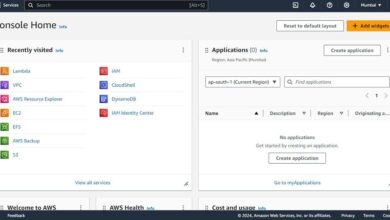
1. Log in to the AWS Management Console and navigate to Elastic Beanstalk.
2. Click “Create Application.”
3. Enter a name and description.
4. Choose a platform (e.g., Python 3.9).
5. Upload your code (ZIP file or from S3).
6. Configure environment (e.g., t3.small instance).
7. Click “Create.”
Beanstalk will provision resources and deploy your app. In a few minutes, you’ll get a URL like myapp.us-east-1.elasticbeanstalk.com.
Using EB CLI for Local Development
The Elastic Beanstalk CLI (EB CLI) lets you manage environments from your terminal. Install it via pip:
pip install awsebcliThen initialize your project:
eb init -p python-3.9 my-appCreate an environment:
eb create dev-envDeploy changes:
eb deployThe EB CLI simplifies local testing and integration with Git workflows.
Integrating with CI/CD Pipelines
You can automate deployments using AWS CodePipeline, Jenkins, or GitHub Actions. For example, a GitHub Actions workflow can:
- Run tests on pull requests.
- Build the application package.
- Deploy to Beanstalk using AWS credentials.
Here’s a sample GitHub Actions snippet:
name: Deploy to AWS Beanstalk
on: [push]
jobs:
  deploy:
    runs-on: ubuntu-latest
    steps:
      - uses: actions/checkout@v2
      - name: Deploy to Beanstalk
        uses: einaregilsson/beanstalk-deploy@v19
        with:
          aws_access_key: ${{ secrets.AWS_ACCESS_KEY }}
          aws_secret_key: ${{ secrets.AWS_SECRET_KEY }}
          application_name: my-app
          environment_name: prod-env
          version_label: ${{ github.sha }}
          region: us-east-1
This enables true continuous delivery—every merge to main triggers a deployment.
Best Practices for AWS Beanstalk Optimization
To get the most out of AWS Beanstalk, follow these proven best practices.
Environment Tier Selection: Web vs. Worker
Beanstalk supports two environment types:
- Web Server Environment: Handles HTTP requests. Ideal for frontends and APIs.
- Worker Environment: Processes background jobs from SQS queues. Perfect for email sending, image processing, or data syncing.
Use worker environments to offload heavy tasks and keep your web tier responsive. For example, when a user uploads a photo, the web app stores it in S3 and sends a message to SQS. The worker environment picks it up and generates thumbnails.
Managing Configuration with .ebextensions
Store all environment-specific settings in .ebextensions instead of hardcoding them. This includes:
- Environment variables (e.g.,
DATABASE_URL). - SSL certificate configurations.
- Log rotation settings.
Example .ebextensions/01-environment.config:
option_settings:
  aws:elasticbeanstalk:application:environment:
    NODE_ENV: production
    DB_HOST: mydb.ccc123.us-east-1.rds.amazonaws.com
This ensures consistency across environments and simplifies deployment.
Cost Optimization Strategies
Beanstalk itself is free—you only pay for the underlying resources. To reduce costs:
- Use smaller instance types in non-production environments.
- Enable Auto Scaling to scale down to zero (if using Spot Instances or with proper configuration).
- Use Reserved Instances or Savings Plans for predictable workloads.
- Monitor S3 storage for old application versions and clean them up.
You can also use AWS Cost Explorer to analyze spending patterns and identify savings opportunities.
Common Challenges and How to Solve Them
While AWS Beanstalk is powerful, it’s not without challenges. Here’s how to tackle the most common issues.
Deployment Failures and Debugging Tips
Deployments can fail due to code errors, configuration issues, or resource limits. To debug:
- Check the Logs tab in the AWS Console.
- Look for
eb-engine.loganderror_logfiles. - Use
eb logscommand to download logs locally.
Common causes include:
- Missing dependencies in
requirements.txt(Python). - Port conflicts in Docker containers.
- Invalid
.ebextensionssyntax.
Always test deployments in a staging environment first.
Handling High Availability and Failover
To ensure your app stays online during outages:
- Deploy across multiple Availability Zones (AZs).
- Use RDS Multi-AZ for database redundancy.
- Enable Elastic IP or Route 53 for DNS failover.
Beanstalk automatically distributes instances across AZs if configured. Combine this with health checks and Auto Recovery to minimize downtime.
Security Best Practices
Security is a shared responsibility. AWS secures the infrastructure; you secure the app and data.
- Use IAM roles for EC2 instances instead of hardcoding credentials.
- Enable HTTPS with ACM (AWS Certificate Manager).
- Regularly update platform versions to patch vulnerabilities.
- Restrict SSH access using security groups.
Also, enable AWS Config and CloudTrail to audit changes and detect anomalies.
Real-World Use Cases of AWS Beanstalk
Many companies use AWS Beanstalk to power their applications. Here are a few real-world examples.
Startup MVP Deployment
Startups often need to launch quickly with limited DevOps resources. Beanstalk allows them to deploy a minimum viable product (MVP) in hours, not weeks. For example, a fintech startup can deploy a Node.js API with PostgreSQL on RDS, scale as user base grows, and focus on product development instead of infrastructure.
Enterprise Application Modernization
Large enterprises use Beanstalk to modernize legacy .NET or Java applications. Instead of rewriting everything for microservices, they containerize monolithic apps and deploy them on Beanstalk with minimal changes. This reduces risk and accelerates cloud migration.
Event-Driven Microservices
Teams building microservices can use Beanstalk’s worker environments to process messages from SQS. For instance, an e-commerce platform can use a web environment for the storefront and a worker environment to update inventory, send order confirmations, and generate invoices.
What is AWS Beanstalk used for?
AWS Beanstalk is used to deploy and manage web applications and services without dealing with infrastructure. It automates provisioning, scaling, and monitoring, making it ideal for developers who want to focus on code.
Is AWS Beanstalk free to use?
AWS Beanstalk itself is free. You only pay for the AWS resources (EC2, S3, RDS, etc.) your application consumes. There are no additional charges for using Beanstalk.
How does AWS Beanstalk compare to AWS Lambda?
Beanstalk is for long-running applications (e.g., websites, APIs), while Lambda is for short-lived, event-driven functions. Beanstalk gives more control over the environment; Lambda is fully serverless and scales to zero.
Can I use Docker with AWS Beanstalk?
Yes, AWS Beanstalk supports both single-container and multi-container Docker environments. You can define your services using Dockerfiles or docker-compose.yml.
How do I troubleshoot a failed deployment in Beanstalk?
Check the environment health dashboard, download logs using the EB CLI (eb logs), and inspect eb-engine.log for errors. Common issues include misconfigured .ebextensions, missing dependencies, or port conflicts.
In conclusion, AWS Beanstalk is a powerful, flexible, and cost-effective platform for deploying applications in the cloud. It bridges the gap between full infrastructure control and developer simplicity. Whether you’re a solo developer launching a side project or an enterprise modernizing legacy systems, Beanstalk offers the tools to deploy faster, scale smarter, and manage less. By leveraging its automation, customization options, and integration with the broader AWS ecosystem, teams can focus on innovation rather than operations. The key is understanding its architecture, following best practices, and using the right tools for monitoring and CI/CD. With AWS Beanstalk, the cloud becomes not just accessible, but truly productive.
Recommended for you 👇
Further Reading: