Ever wondered how Netflix streams seamlessly or how Airbnb scales globally in seconds? The answer lies in AWS Cloud—a powerhouse behind modern digital transformation. Let’s dive into why it’s a game-changer.



What Is AWS Cloud and Why It Matters

Amazon Web Services (AWS) Cloud is not just another tech buzzword—it’s the backbone of modern computing. Launched in 2006, AWS revolutionized how businesses deploy, manage, and scale IT infrastructure. Unlike traditional on-premise servers, AWS Cloud offers on-demand access to computing resources over the internet, enabling organizations to innovate faster and reduce costs.
The Birth of AWS Cloud
AWS began as an internal solution at Amazon to handle unpredictable traffic spikes during holiday seasons. Realizing the potential, Amazon launched AWS publicly in 2006 with Simple Storage Service (S3) and Elastic Compute Cloud (EC2). This marked the beginning of the cloud computing era.
- AWS was the first to offer scalable, pay-as-you-go cloud services.
- It introduced the concept of Infrastructure as a Service (IaaS).
- Today, AWS powers millions of businesses globally.
“AWS didn’t just enter the market—it created the market,” says Matthew Ball, a leading analyst in digital infrastructure.
How AWS Cloud Works
AWS Cloud operates on a global network of data centers. These are organized into Regions and Availability Zones (AZs) for redundancy and low latency. When you deploy an application on AWS, you’re essentially renting virtual servers, storage, and databases hosted in these secure facilities.
- Regions are geographic areas (e.g., US East, EU Frankfurt).
- Each Region contains multiple isolated AZs for fault tolerance.
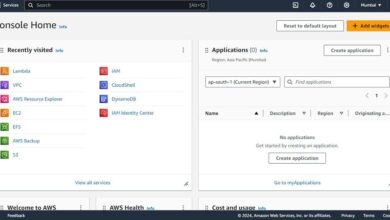
- Users can deploy resources via the AWS Management Console, CLI, or SDKs.
For more details on AWS architecture, visit the official AWS Cloud computing guide.
Key Benefits of Using AWS Cloud
The shift to AWS Cloud isn’t just about technology—it’s about strategic advantage. From startups to Fortune 500 companies, organizations leverage AWS for agility, scalability, and innovation.
Cost Efficiency and Pay-as-You-Go Model
One of the most compelling reasons to adopt AWS Cloud is its pricing model. Instead of investing millions in hardware, businesses pay only for the resources they consume.
- No upfront capital expenditure (CapEx).
- Flexible pricing: On-Demand, Reserved, and Spot Instances.
- Free Tier available for new users (12 months free on select services).
This model is especially beneficial for startups and SMEs looking to minimize risk while scaling rapidly.
Scalability and Elasticity
AWS Cloud allows instant scaling—both up and down—based on demand. Whether you’re launching a new app or handling Black Friday traffic, AWS adjusts automatically.
- Auto Scaling groups maintain performance during traffic spikes.
- Elastic Load Balancing distributes traffic across instances.
- Serverless options like AWS Lambda scale to zero when idle.
“With AWS, our platform scaled from 10,000 to 2 million users in under six months without a single outage,” shares a CTO from a fast-growing SaaS startup.
Global Reach and Low Latency
AWS operates in 33 geographic Regions with 102 Availability Zones as of 2024, and more are coming. This global footprint ensures low-latency access for users worldwide.
- Deploy applications close to end-users for faster response times.
- Use Amazon CloudFront for content delivery at the edge.
- Support compliance with local data residency laws via region selection.
Explore the AWS Global Infrastructure map to see real-time data center locations.
AWS Cloud Core Services Overview
AWS offers over 200 fully featured services. While it’s impossible to cover all, understanding the core pillars helps grasp the platform’s power.
Compute Services: Powering Your Applications
Compute is the engine of any cloud environment. AWS provides multiple options tailored to different workloads.
- Amazon EC2: Virtual servers in the cloud with customizable instance types (e.g., general purpose, GPU-optimized).
- AWS Lambda: Run code without provisioning servers—ideal for event-driven tasks.
- Elastic Kubernetes Service (EKS): Managed Kubernetes for containerized applications.
These services allow developers to focus on code, not infrastructure.
Storage Solutions: Secure and Scalable
From simple file storage to petabyte-scale data lakes, AWS Cloud offers diverse storage options.
- Amazon S3: Object storage for backups, media, and analytics. Offers 99.999999999% durability.
- EBS (Elastic Block Store): Block-level storage for EC2 instances.
- Glacier: Low-cost archival storage for long-term retention.
S3 alone stores over 2 trillion objects and is used by NASA, Dropbox, and Adobe.
Networking and Content Delivery
Robust networking ensures secure, high-performance connectivity across services and users.
- Amazon VPC: Isolated virtual networks to control traffic and security.
- Route 53: Scalable DNS service with high availability.
- CloudFront: CDN that caches content at 450+ edge locations globally.
These tools are critical for building secure, responsive applications.
Security and Compliance in AWS Cloud
Security is often a top concern when moving to the cloud. AWS addresses this with a shared responsibility model and enterprise-grade tools.
Shared Responsibility Model Explained
In the AWS Cloud, security is a shared duty:
- AWS secures the infrastructure (hardware, software, facilities).
- Customer secures data, applications, and access management.
This model ensures clarity and accountability. For example, AWS manages the physical security of data centers, while you manage IAM policies and encryption keys.
Key Security Services
AWS provides a comprehensive suite of security tools:
- AWS Identity and Access Management (IAM): Control who can access resources and what they can do.
- AWS Shield: Protect against DDoS attacks.
- AWS WAF: Web Application Firewall to block common exploits.
- Amazon GuardDuty: Threat detection using machine learning.
- AWS Key Management Service (KMS): Manage encryption keys with ease.
These services help organizations meet strict regulatory requirements like HIPAA, GDPR, and SOC 2.
Compliance and Certifications
AWS holds more compliance certifications than any other cloud provider, including:
- ISO 27001, 27017, 27018
- PCI DSS Level 1
- GDPR
- FedRAMP (for U.S. government agencies)
This makes AWS Cloud a trusted choice for healthcare, finance, and public sector organizations. Learn more at the AWS Compliance Programs page.
DevOps and Automation on AWS Cloud
DevOps is at the heart of modern software delivery, and AWS Cloud provides robust tools to automate, monitor, and optimize the development lifecycle.
CI/CD with AWS Developer Tools
AWS enables seamless Continuous Integration and Continuous Deployment (CI/CD) pipelines:
- AWS CodeCommit: Secure Git-based repository for source code.
- AWS CodeBuild: Compile and test code in the cloud.
- AWS CodeDeploy: Automate application deployments.
- AWS CodePipeline: Orchestrate the entire CI/CD workflow.
These tools integrate with GitHub, Jenkins, and other third-party platforms.
Infrastructure as Code (IaC)
IaC allows teams to define infrastructure using code, ensuring consistency and repeatability.
- AWS CloudFormation: Use JSON or YAML templates to provision resources.
- Terraform (by HashiCorp): Popular third-party tool with deep AWS integration.
IaC reduces human error, accelerates deployments, and supports version control.
Monitoring and Logging
Visibility into system performance is crucial for reliability.
- Amazon CloudWatch: Monitor metrics, logs, and set alarms.
- AWS CloudTrail: Track user activity and API calls for audit purposes.
- Amazon EventBridge: Respond to system events in real time.
These tools empower teams to detect issues before users do.
AWS Cloud for Data and Machine Learning
Data is the new oil, and AWS Cloud provides the refinery. From data lakes to AI, AWS enables intelligent applications at scale.
Big Data Analytics on AWS
AWS offers a full suite of analytics services:
- Amazon Redshift: Fast, petabyte-scale data warehousing.
- Amazon EMR: Managed Hadoop and Spark clusters for big data processing.
- AWS Glue: Serverless ETL (Extract, Transform, Load) service.
- Amazon Kinesis: Real-time data streaming for analytics and ML.
Companies like Expedia and Intuit use these tools to derive real-time insights from massive datasets.
Machine Learning and AI Services
You don’t need a PhD to use AI on AWS Cloud. AWS democratizes machine learning with:
- Amazon SageMaker: Build, train, and deploy ML models quickly.
- Rekognition: Image and video analysis (e.g., facial recognition).
- Polly: Turn text into lifelike speech.
- Lex: Build conversational chatbots (powers Amazon Alexa).
- Comprehend: Extract insights from text using NLP.
These services are used in healthcare for diagnostics, in retail for personalized recommendations, and in security for surveillance.
Data Lakes and Governance
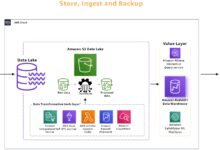
AWS enables secure, scalable data lakes using:
- Amazon S3 as the foundational storage layer.
- AWS Lake Formation: Simplify data lake setup with access controls and cataloging.
- Amazon Athena: Query data directly in S3 using SQL.
This architecture supports centralized data governance and cross-functional analytics.
Migrating to AWS Cloud: Strategy and Best Practices
Moving to AWS Cloud isn’t just technical—it’s strategic. A well-planned migration minimizes downtime and maximizes ROI.
The 6-R Migration Strategy
AWS recommends the 6-R framework for migration:
- Rehost (Lift & Shift): Move applications as-is to the cloud.
- Replatform: Make minor optimizations (e.g., switch to RDS).
- Refactor/Re-architect: Rewrite apps for cloud-native benefits (e.g., microservices).
- Repurchase: Switch to a different product (e.g., SaaS).
- Retire: Decommission unused applications.
- Retain: Keep some systems on-premise temporarily.
This approach allows phased, risk-managed transitions.
Tools to Accelerate Migration
AWS provides tools to streamline the process:
- AWS Migration Hub: Track migration progress across tools.
- Server Migration Service (SMS): Automate VM replication to EC2.
- Database Migration Service (DMS): Migrate databases with minimal downtime.
- Application Discovery Service: Identify on-premise assets and dependencies.
These tools reduce manual effort and improve accuracy.
Avoiding Common Pitfalls
Many migrations fail due to poor planning. Key pitfalls include:
- Underestimating network bandwidth needs.
- Ignoring security and compliance requirements.
- Over-provisioning resources, leading to cost overruns.
- Lack of staff training on AWS Cloud best practices.
Engaging AWS Professional Services or Partner Network (APN) consultants can mitigate these risks.
Future Trends Shaping AWS Cloud
The cloud is evolving rapidly. AWS continues to innovate, setting trends that shape the future of technology.
Serverless Computing Growth
Serverless is gaining momentum. AWS Lambda processes billions of requests daily. The trend is toward event-driven, cost-efficient architectures where developers focus solely on code.
- Reduced operational overhead.
- Near-infinite scalability.
- Pay-per-execution pricing.
Expect more serverless databases (e.g., Aurora Serverless) and integrations.
Edge Computing with AWS
As IoT and real-time apps grow, processing data closer to the source becomes critical.
- AWS Wavelength: Embed AWS services within 5G networks.
- AWS Outposts: Run AWS infrastructure on-premise.
- AWS Snow Family: Portable devices for offline data transfer.
This hybrid approach bridges cloud and physical worlds.
AI and Generative AI Integration
AWS is investing heavily in AI. With the launch of Amazon Bedrock and Titan models, AWS enables enterprises to build generative AI applications securely.
- Access foundation models from Anthropic, Meta, and Amazon.
- Customize models with private data.
- Integrate with existing AWS services like SageMaker.
Generative AI is transforming customer service, content creation, and software development.
What is AWS Cloud?
AWS Cloud is Amazon’s comprehensive cloud computing platform offering over 200 services, including computing, storage, databases, machine learning, and security, delivered over the internet on a pay-as-you-go basis.
How much does AWS Cloud cost?
Pricing varies by service and usage. AWS offers a Free Tier for new users, and most services follow a pay-as-you-go model. You can use the AWS Pricing Calculator to estimate costs based on your needs.
Is AWS Cloud secure?
Yes. AWS Cloud is highly secure, with a shared responsibility model, encryption, IAM, DDoS protection, and compliance with global standards like GDPR and HIPAA. Security is built into every layer of the platform.
What industries use AWS Cloud?
AWS is used across industries including healthcare, finance, retail, media, government, and education. Companies like Netflix, Airbnb, and Unilever rely on AWS for scalability and innovation.
How do I get started with AWS Cloud?
Sign up at aws.amazon.com, explore the Free Tier, take free training on AWS Skill Builder, and start with simple services like S3 or EC2.
From its revolutionary launch to its dominance today, AWS Cloud has redefined how businesses operate in the digital age. Its unmatched breadth of services, global infrastructure, and relentless innovation make it the top choice for organizations aiming to scale, secure, and future-proof their IT. Whether you’re a startup or an enterprise, understanding and leveraging AWS Cloud isn’t just an option—it’s a strategic imperative. The future is in the cloud, and AWS is leading the charge.
Further Reading: