Logging into the AWS Console doesn’t have to be complicated. Whether you’re a beginner or a seasoned cloud engineer, mastering the aws console login process is your first step toward unlocking the full power of Amazon Web Services. Let’s break it down—simply, securely, and efficiently.


Understanding the AWS Console Login: The Gateway to Cloud Power

The aws console login is your primary entry point to manage Amazon Web Services. It’s a web-based interface that allows users to configure, monitor, and deploy cloud resources across AWS’s vast ecosystem. From launching EC2 instances to managing S3 buckets, everything starts with a successful login.
What Is the AWS Management Console?
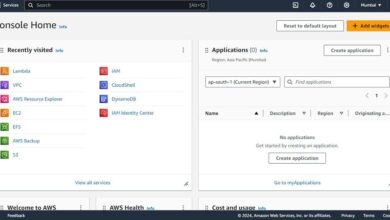
The AWS Management Console is a user-friendly graphical interface provided by Amazon to interact with its cloud services. Unlike command-line tools or APIs, the console offers a visual way to explore, configure, and troubleshoot AWS resources. It’s designed for developers, system administrators, and business users who prefer point-and-click navigation over scripting.
- Accessible via any modern web browser
- Supports multi-factor authentication (MFA) for enhanced security
- Available in multiple languages and regions
According to AWS’s official documentation, the console provides real-time monitoring, cost tracking, and service integration—all from a single dashboard.
Why the AWS Console Login Matters
A secure and efficient aws console login isn’t just about access—it’s about control. Every login represents a potential entry point for both authorized users and malicious actors. Ensuring that your login process is robust protects sensitive data, prevents unauthorized access, and maintains compliance with industry standards like HIPAA, GDPR, and SOC 2.
“The AWS Management Console is the most widely used interface for managing AWS services, especially among new users and small to medium-sized businesses.” — AWS User Survey 2023
Moreover, a smooth login experience reduces downtime, accelerates onboarding, and improves overall productivity for DevOps teams and cloud architects.
Step-by-Step Guide to AWS Console Login
Navigating the aws console login process correctly ensures you gain access without delays or security risks. Whether you’re logging in as a root user or an IAM user, the steps are straightforward but must be followed precisely.
How to Access the AWS Console Login Page
To begin the aws console login, open your preferred web browser and navigate to https://aws.amazon.com/console/. On the homepage, click the “Sign In to the Console” button located at the top right corner. This redirects you to the official AWS sign-in page at https://console.aws.amazon.com/.
- Always verify the URL to avoid phishing attacks
- Bookmark the official login page for future use
- Avoid using public or shared devices for login
Amazon emphasizes that users should only log in through verified domains to prevent credential theft.
Logging In as a Root User vs. IAM User
There are two primary account types in AWS: the root user and IAM (Identity and Access Management) users. The root user is the original account created when you first signed up for AWS. It has unrestricted access to all services and billing information.
In contrast, IAM users are individual identities created by administrators with specific permissions. AWS strongly recommends using IAM users for daily operations and reserving the root user for critical tasks like changing account settings or enabling MFA.
- Root user email: Your registered AWS account email
- IAM user login URL: https://[your-account-id].signin.aws.amazon.com/console
- Always use IAM roles for applications and services
For more details, refer to the AWS IAM documentation on root user best practices.
Entering Credentials and Completing the Login
Once on the correct login page, enter your email address (for root users) or account ID and IAM username. After submitting, you’ll be prompted to enter your password. Ensure that caps lock is off and your keyboard layout is correct, as AWS passwords are case-sensitive.
If multi-factor authentication (MFA) is enabled, you’ll need to provide a time-based one-time password (TOTP) from your authenticator app or a hardware key. This adds a critical layer of security by requiring something you have (the device) in addition to something you know (your password).
- Supported MFA devices: Google Authenticator, Authy, YubiKey
- Virtual MFA apps generate 6-digit codes every 30 seconds
- Hardware MFA devices offer higher security for privileged accounts
After entering the MFA code, click “Sign In” to access your AWS dashboard.
Common Issues During AWS Console Login and How to Fix Them
Even experienced users can encounter problems during the aws console login process. Understanding common issues and their solutions can save time and reduce frustration.
Forgot Password or Locked Account
One of the most frequent issues is forgetting your password or getting locked out due to multiple failed attempts. AWS locks accounts temporarily after several incorrect password entries to prevent brute-force attacks.
To recover your password, click “Forgot your password?” on the login page. You’ll be prompted to enter your email address or account ID. AWS will send a password reset link to the registered email. Follow the instructions to create a new password.
- Check spam/junk folders if the reset email doesn’t arrive
- Use a strong, unique password with at least 12 characters
- Consider using a password manager to store credentials securely
For root users, AWS requires additional verification steps before allowing a password reset.
Multi-Factor Authentication (MFA) Problems
MFA is a cornerstone of AWS security, but it can also be a source of login issues. Common problems include lost or damaged MFA devices, expired tokens, or misconfigured settings.
If you lose your MFA device, AWS allows recovery through backup codes or by contacting support. However, this process can take time, especially for root accounts. To avoid disruption, AWS recommends:
- Storing backup MFA codes in a secure location
- Enrolling in AWS Support plans for faster assistance
- Using virtual MFA apps with cloud backups (e.g., Authy)
For detailed troubleshooting, visit the AWS guide on recovering from a lost MFA device.
Region and URL Configuration Errors
Another common issue is accessing the wrong regional console or using an incorrect login URL. While the main console URL (console.aws.amazon.com) automatically routes you to the nearest region, some organizations require access to specific regions like us-east-1 or eu-west-1.
IAM users must use the correct sign-in URL, which includes the AWS account ID. Using the wrong URL results in an “Invalid account ID or username” error. Always double-check the URL format:
- Correct format: https://[account-id].signin.aws.amazon.com/console
- Example: https://123456789012.signin.aws.amazon.com/console
- Account ID can be found in the AWS Management Console under “My Account”
Additionally, ensure your browser accepts cookies and JavaScript, as the AWS Console relies on these for session management.
Enhancing Security for Your AWS Console Login
Security should be the top priority when managing cloud infrastructure. A compromised aws console login can lead to data breaches, financial loss, and service disruptions. Implementing strong security practices protects your organization and ensures compliance.
Enable Multi-Factor Authentication (MFA)
MFA is the single most effective step to secure your aws console login. It requires users to present two forms of identification: something they know (password) and something they have (MFA device).
For root users, AWS mandates enabling MFA to access certain high-risk actions. For IAM users, administrators can enforce MFA through IAM policies. You can configure MFA via the IAM console under “Security credentials. “
- Virtual MFA: Apps like Google Authenticator or Microsoft Authenticator
- Hardware MFA: FIPS 140-2 validated devices like YubiKey
- U2F Security Keys: Support WebAuthn for passwordless authentication
Learn more at AWS MFA Features.
Use Strong Password Policies
A weak password undermines even the strongest MFA setup. AWS allows administrators to define password policies that enforce complexity, length, and rotation requirements.
In the IAM console, navigate to “Account Settings” to configure your password policy. Recommended settings include:
- Minimum length: 12 characters
- Require at least one uppercase, lowercase, number, and symbol
- Prevent password reuse (remember last 5 passwords)
- Set expiration to 90 days
These policies apply to all IAM users and help maintain a high baseline of security across the organization.
Leverage IAM Roles and Temporary Credentials
Instead of relying on long-term access keys, AWS promotes the use of IAM roles and temporary security credentials. Roles allow entities (users, applications, services) to assume predefined permissions for a limited time.
For example, an EC2 instance can assume an IAM role to access S3 without storing access keys on the machine. This reduces the risk of credential leakage and aligns with the principle of least privilege.
- Temporary credentials expire automatically (typically 1 hour)
- Roles can be assumed across AWS accounts (cross-account access)
- STS (Security Token Service) issues temporary tokens securely
For implementation guidance, see AWS IAM Roles Documentation.
Best Practices for Managing AWS Console Login at Scale
For enterprises with hundreds of users, managing the aws console login process efficiently requires automation, governance, and monitoring. Manual user management doesn’t scale and increases the risk of misconfigurations.
Implement Single Sign-On (SSO) with AWS SSO
AWS SSO enables centralized identity management across multiple AWS accounts and business applications. It integrates with existing identity providers like Microsoft Active Directory, Azure AD, or Okta.
With AWS SSO, users can log in once and access all their assigned AWS accounts and third-party apps without re-entering credentials. This improves user experience and simplifies administration.
- Centralized user provisioning and deprovisioning
- Support for SCIM (System for Cross-domain Identity Management)
- Integration with SAML 2.0 and OpenID Connect (OIDC)
Explore AWS SSO at https://aws.amazon.com/single-sign-on/.
Automate User Provisioning with Identity Providers
Manually creating IAM users for every employee is error-prone and time-consuming. Instead, integrate AWS with your corporate identity provider (IdP) to automate user lifecycle management.
Using SAML federation, you can map IdP groups to IAM roles, granting appropriate permissions based on job function. When an employee leaves, disabling their corporate account automatically revokes AWS access.
- Reduces administrative overhead
- Ensures consistent permission assignments
- Supports just-in-time (JIT) provisioning
This approach is especially valuable for large organizations with dynamic teams.
Monitor Login Activity with AWS CloudTrail
Visibility into who accessed the aws console login and when is crucial for security and compliance. AWS CloudTrail logs all API calls and console sign-ins, providing an audit trail of user activity.
You can configure CloudTrail to deliver logs to Amazon S3, integrate with CloudWatch for real-time alerts, or send them to a SIEM system for advanced analysis.
- Track failed login attempts
- Monitor geographic access patterns
- Set up alarms for suspicious behavior (e.g., logins from unusual locations)
For setup instructions, refer to AWS CloudTrail User Guide.
Advanced Tips for Power Users: Streamlining AWS Console Login
For developers and DevOps engineers, every second counts. Optimizing the aws console login experience can improve workflow efficiency and reduce context switching.
Use AWS CLI and SDKs Alongside the Console
While the AWS Management Console is great for visualization, automation tasks are better handled via the AWS CLI or SDKs. You can authenticate using the same IAM credentials and switch seamlessly between interfaces.
After logging in, use the AWS CLI to perform bulk operations, script deployments, or integrate with CI/CD pipelines. This reduces reliance on the console for repetitive tasks.
- Install AWS CLI:
pip install awscli - Configure credentials:
aws configure - Use named profiles for multiple accounts
Learn more at AWS CLI Documentation.
Bookmark Commonly Used Console URLs
Saving direct links to frequently accessed services (e.g., EC2 dashboard, S3 buckets, CloudWatch) saves time. You can even create custom URLs with pre-filled filters or regions.
For example, bookmark: https://console.aws.amazon.com/ec2/v2/home?region=us-east-1 to always open EC2 in us-east-1.
- Create folders in your browser for different AWS services
- Use URL parameters to set default views
- Share bookmarks with team members for consistency
This small habit can significantly boost productivity.
Leverage AWS Organizations and Account Switching
If you manage multiple AWS accounts (e.g., dev, staging, production), AWS Organizations helps centralize governance. From the console, you can switch between accounts without logging out.
Enable the account switcher in the top-right corner of the console. Once configured, you can move between environments with a single click, maintaining separate permissions and billing.
- Set up consolidated billing
- Apply service control policies (SCPs)
- Automate account creation with AWS Control Tower
For more, visit AWS Organizations Overview.
Troubleshooting and Recovery: What to Do When You Can’t Log In
Despite best efforts, login failures happen. Knowing how to respond quickly minimizes downtime and security exposure during an aws console login failure.
Recovering Root User Access
Losing root user access is a critical issue because it controls billing, account settings, and MFA enrollment. If you’ve lost your root password or MFA device, AWS provides a recovery process through the “Cannot access your account?” link.
You’ll need to verify your identity using the registered email and phone number. AWS may request additional documentation, such as a government-issued ID or proof of payment.
- Response time varies from hours to days depending on verification complexity
- Ensure contact information is always up to date
- Designate multiple root users or use IAM with full privileges as a backup
See AWS Knowledge Center: Lost Root Access.
Contacting AWS Support for Login Issues
If self-service recovery fails, contacting AWS Support is the next step. However, only root users or IAM users with appropriate permissions can open support cases.
AWS offers four support plans: Basic, Developer, Business, and Enterprise. Higher tiers provide faster response times and dedicated technical account managers.
- Basic: Free, community forums only
- Developer: $29/month, 12-hour response for system issues
- Business: $100/month, 1-hour response for production issues
- Enterprise: $15,000/month, 15-minute response, TAM included
For urgent login problems, Business or Enterprise plans are recommended.
Preventing Future Login Failures
Proactive measures reduce the likelihood of future aws console login issues. Implement the following best practices:
- Document login procedures and recovery steps
- Store backup MFA codes in a secure vault
- Regularly audit IAM users and permissions
- Train team members on AWS security practices
- Use infrastructure-as-code (IaC) tools like AWS CloudFormation or Terraform
Automation and documentation are key to resilience.
How do I log in to the AWS Console?
To log in to the AWS Console, go to https://aws.amazon.com/console/ and click “Sign In to the Console.” Enter your email (for root users) or account ID and IAM username, then input your password. If MFA is enabled, provide the code from your authenticator app.
What should I do if I forget my AWS password?
If you forget your AWS password, click “Forgot your password?” on the login page. Enter your email or account ID, and AWS will send a password reset link. Follow the instructions to create a new password. For root users, additional verification may be required.
Can I use single sign-on (SSO) for AWS Console login?
Yes, AWS supports Single Sign-On (SSO) through AWS SSO or third-party identity providers. You can integrate with Azure AD, Okta, or Active Directory to enable federated access, allowing users to log in using corporate credentials.
Why is my AWS Console login failing?
Login failures can occur due to incorrect credentials, expired passwords, disabled accounts, MFA issues, or using the wrong login URL. Check your internet connection, verify the URL, ensure MFA is working, and confirm your account status.
Is it safe to log in to AWS Console from public Wi-Fi?
It’s not recommended to perform an aws console login from public Wi-Fi due to the risk of man-in-the-middle attacks. If necessary, use a trusted VPN to encrypt your connection and ensure MFA is enabled for added protection.
Mastering the aws console login is essential for anyone working with Amazon Web Services. From understanding the basics to implementing advanced security and automation, this guide has covered every aspect—from initial access to recovery strategies. By following best practices like enabling MFA, using IAM roles, and leveraging AWS SSO, you can ensure a secure, efficient, and scalable login experience. Whether you’re a solo developer or part of a large enterprise, a well-managed login process is the foundation of a robust cloud strategy.
Recommended for you 👇
Further Reading: