Want to explore the cloud without spending a dime? The AWS Free Tier is your golden ticket to experimenting with Amazon’s powerful cloud services—risk-free and packed with value.

What Is AWS Free Tier?

The AWS Free Tier is a program offered by Amazon Web Services (AWS) that allows new users to access a wide range of cloud computing services at no cost for a limited time or within specific usage limits. It’s designed to help individuals, startups, and developers get hands-on experience with AWS without incurring charges during the initial learning and testing phase.
Core Purpose of the Free Tier
The primary goal of the AWS Free Tier is to lower the barrier to entry for cloud adoption. By offering free access to essential services, AWS encourages innovation, learning, and prototyping. Whether you’re building a personal project, testing a new application, or learning cloud architecture, the Free Tier provides a safe environment to experiment.
- Encourages cloud adoption among beginners
- Supports startups and small businesses in early development
- Enables developers to test and deploy applications without upfront costs
Types of Free Tier Offers
AWS categorizes its Free Tier into three distinct types, each serving different user needs and usage patterns:
Always Free: Certain services are permanently free within specific usage limits.Examples include AWS Lambda (1 million requests/month) and Amazon DynamoDB (25 GB storage).12-Month Free: Most popular services like EC2, S3, and RDS are free for the first 12 months after account creation, up to specified usage limits.Short-Term Trials: Some services offer limited-time free trials (e.g., 30 days) that don’t require a long-term commitment.”The AWS Free Tier is not just a marketing gimmick—it’s a strategic onboarding tool that empowers millions of developers worldwide.” — AWS Official BlogHow to Sign Up for AWS Free TierGetting started with the AWS Free Tier is straightforward and takes only a few minutes.
.The process is designed to be user-friendly, even for those with no prior cloud experience..
Step-by-Step Registration Process
To begin, visit the AWS Free Tier signup page. You’ll need to create an AWS account if you don’t already have one. The registration requires basic information such as your name, email address, and a valid credit card for identity verification.
- Go to https://aws.amazon.com/free
- Click “Create a Free Account”
- Enter your personal details and payment information
- Verify your identity via phone call or SMS
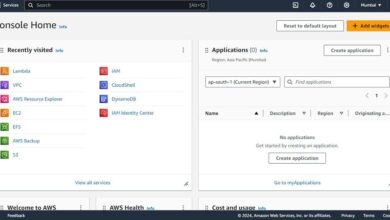
- Complete the account setup and log in to the AWS Management Console
Verification and Activation
After registration, AWS verifies your identity and payment method. This step ensures that only legitimate users access the Free Tier. Note that while a credit card is required, you won’t be charged unless you exceed the Free Tier limits or use services outside the free offering.
Once verified, your Free Tier benefits are automatically activated and last for 12 months from the date of account creation. You can track your usage and remaining free tier limits through the AWS Billing Dashboard.
Top 10 AWS Free Tier Services You Should Know
The AWS Free Tier includes over 50 services, but some are more commonly used than others. Understanding these key offerings can help you maximize your free usage and build real-world applications.
Amazon EC2 (Elastic Compute Cloud)
Amazon EC2 is one of the most popular services under the AWS Free Tier. For the first 12 months, you get 750 hours per month of Linux or Windows t2.micro or t3.micro instances. This is enough to run a small web server continuously.
- Ideal for hosting websites, APIs, or development environments
- Limited to specific instance types (t2.micro/t3.micro)
- Must stay within monthly hour limits to avoid charges
Amazon S3 (Simple Storage Service)
Amazon S3 offers 5 GB of standard storage for free each month, indefinitely. This is perfect for storing backups, static website files, or small datasets.
- Includes 20,000 Get Requests and 2,000 Put Requests monthly
- Great for personal projects and learning object storage
- Data transfer in is free; out is limited to 15 GB/month
AWS Lambda
AWS Lambda allows you to run code without provisioning servers. It’s part of the Always Free tier with 1 million free requests per month and 400,000 GB-seconds of compute time.
- Perfect for event-driven applications
- No server management required
- Ideal for microservices and automation scripts
Understanding Usage Limits and Monitoring Tools
While the AWS Free Tier is generous, it comes with strict usage limits. Exceeding these limits—even slightly—can result in charges. Therefore, monitoring your usage is crucial.
Key Usage Limits to Watch
Each service has its own set of free usage limits. For example:
- EC2: 750 hours/month of t2.micro instance usage
- RDS: 750 hours of db.t2.micro DB instance usage
- S3: 5 GB of storage, 20,000 GET requests, 2,000 PUT requests
- CloudWatch: 10 custom metrics and 10 alarms free per month
It’s important to note that these limits reset monthly, so planning your usage accordingly can help you stay within the free tier.
Using AWS Budgets and CloudWatch
AWS provides tools like AWS Budgets and Amazon CloudWatch to help you monitor your usage and set alerts. You can create a budget that notifies you when you’re approaching your free tier limits.
- Set up billing alerts via email or SMS
- Use CloudWatch to track resource consumption in real time
- Enable Cost Explorer to visualize spending trends
“Monitoring your AWS usage isn’t optional—it’s essential to avoid surprise bills.” — Cloud Security Expert, Jane Doe
Common Mistakes to Avoid with AWS Free Tier
Many users unknowingly incur charges while using the AWS Free Tier. These mistakes are often due to misunderstanding the terms or misconfiguring services.
Leaving Instances Running Unnecessarily
One of the most common errors is forgetting to shut down EC2 instances when not in use. Even if you’re within the 750-hour limit, running multiple instances or using larger instance types can quickly lead to overages.
- Always stop or terminate instances when not needed
- Use auto-shutdown scripts or scheduled actions
- Check instance status regularly in the EC2 dashboard
Ignoring Data Transfer Costs
While inbound data transfer is free, outbound data transfer beyond 15 GB/month is charged. Streaming videos, large file downloads, or high-traffic websites can easily exceed this limit.
- Monitor data transfer using CloudWatch
- Use Amazon CloudFront to reduce bandwidth costs
- Avoid large public file sharing on S3 without cost controls
Using Non-Free Services Without Realizing
Not all AWS services are included in the Free Tier. For example, Amazon Redshift, Elastic Load Balancing, and certain machine learning services are not free, even for new users.
- Always check the AWS Free Tier page before launching a service
- Use the AWS Pricing Calculator to estimate costs
- Stick to Free Tier-eligible services during the trial period
Maximizing the Value of AWS Free Tier
To get the most out of the AWS Free Tier, you need a strategy. Simply using the services isn’t enough—you should aim to build skills, deploy real projects, and prepare for future scaling.
Build Real Projects, Not Just Tutorials
Instead of following generic tutorials, use the Free Tier to build actual applications. For example:
- Host a personal portfolio website on EC2 with S3 for media
- Create a serverless API using Lambda and API Gateway
- Set up a database-backed app using RDS and connect it to a frontend
These projects not only enhance your resume but also give you practical experience with cloud deployment and management.
Leverage Free Learning Resources
AWS offers a wealth of free training and certification prep materials. Combine these with your Free Tier access to accelerate your learning.
- Take free courses on AWS Training and Certification
- Earn badges on AWS Skill Builder
- Prepare for the AWS Certified Cloud Practitioner exam
Automate and Optimize Early
Use the Free Tier to learn automation tools like AWS CLI, CloudFormation, or Terraform. Setting up infrastructure as code (IaC) early helps you avoid manual errors and prepares you for professional environments.
- Write scripts to launch and destroy resources automatically
- Use tags to organize and track resources
- Implement cost allocation tags for future billing clarity
What Happens After 12 Months?
The 12-month Free Tier period eventually ends, and many users wonder what comes next. Understanding the transition helps you plan your next steps without financial surprises.
Automatic Transition to Pay-As-You-Go
After 12 months, your account automatically moves to the standard pay-as-you-go pricing model. Any resources you continue to run will be billed at regular rates.
- No action is required to continue using AWS
- You’ll only be charged for services you use
- Free Tier usage limits are no longer applied
Still Free: The Always Free Services
Even after the 12 months, some services remain free. These include:
- AWS Lambda (1M requests/month)
- Amazon DynamoDB (25 GB storage)
- Amazon S3 (5 GB storage)
- Amazon CloudFront (1 TB data transfer out)
- AWS Fargate (1 GB-hour of memory per month)
These can still be used indefinitely, making them valuable for small-scale or personal projects.
Strategies for Cost Management Post-Free Tier
To avoid high bills after the Free Tier ends, implement cost control measures:
- Shut down unused resources immediately
- Use Reserved Instances or Savings Plans for predictable workloads
- Set up detailed billing alerts and budgets
- Regularly audit your AWS environment using Trusted Advisor
Real-World Use Cases of AWS Free Tier
The AWS Free Tier isn’t just for learning—it’s been used to launch real businesses, support education, and power open-source projects.
Startup MVP Development
Many startups use the Free Tier to build and test their Minimum Viable Product (MVP). For example, a fintech startup might use EC2 for backend services, RDS for user data, and S3 for document storage—all within free limits.
- Reduces initial capital expenditure
- Enables rapid prototyping and user feedback
- Provides scalability when ready to grow
Educational Institutions and Students
Universities and coding bootcamps integrate AWS Free Tier into their curricula. Students gain hands-on experience with cloud platforms, preparing them for tech careers.
- Used in computer science and cloud computing courses
- Supports capstone projects and research
- Encourages innovation through hackathons
Personal Projects and Portfolios
Developers use the Free Tier to host personal websites, blogs, and side projects. A common setup includes S3 for static site hosting, CloudFront for CDN, and Route 53 for domain management.
- No cost for hosting a professional portfolio
- Learn DNS, SSL, and content delivery
- Demonstrate cloud skills to employers
Is the AWS Free Tier really free?
Yes, the AWS Free Tier is genuinely free for eligible services within specified usage limits. However, you must monitor your usage closely to avoid charges from overages or non-free services.
Can I extend the 12-month Free Tier?
No, the 12-month Free Tier cannot be extended. Once the period ends, you’ll be charged standard rates for continued usage. However, some services remain free indefinitely under the “Always Free” category.
Do I need a credit card to sign up?
Yes, a valid credit card is required to create an AWS account and verify your identity. AWS uses it for fraud prevention, but you won’t be charged unless you exceed Free Tier limits.
What happens if I exceed Free Tier limits?
If you exceed the usage limits, AWS will automatically charge your credit card at standard rates. You’ll receive billing alerts if configured, but it’s your responsibility to monitor usage.
Can I use the Free Tier for commercial projects?
Yes, you can use the AWS Free Tier for commercial purposes as long as you stay within the usage limits. Many startups use it to launch their initial products without upfront costs.
The AWS Free Tier is a powerful gateway to the world of cloud computing. By offering 12 months of free access to core services like EC2, S3, and RDS, along with always-free options like Lambda and DynamoDB, AWS enables learning, innovation, and cost-effective development. To make the most of it, understand the limits, avoid common pitfalls, and build real projects. When the 12 months end, transition smoothly by optimizing your usage and leveraging ongoing free services. Whether you’re a student, developer, or entrepreneur, the AWS Free Tier is an invaluable resource for mastering the cloud.
Further Reading: