Logging into AWS doesn’t have to be a chore. Whether you’re a developer, sysadmin, or cloud architect, mastering the AWS login process is your first step toward seamless cloud control. In this guide, we’ll break down everything you need to know to securely and efficiently access your AWS environment.


Understanding AWS Login: The Foundation of Cloud Access

Before diving into the technical steps, it’s crucial to understand what AWS login actually means. It’s not just typing a username and password—it’s the gateway to your entire cloud infrastructure. AWS (Amazon Web Services) uses a robust identity and access management system to ensure only authorized users can interact with resources.
What Is AWS Login?
AWS login refers to the process of authenticating your identity to access the AWS Management Console, Command Line Interface (CLI), or Software Development Kits (SDKs). This authentication is managed through AWS Identity and Access Management (IAM), which allows granular control over who can do what within your AWS account.
Unlike traditional login systems, AWS doesn’t rely solely on passwords. Instead, it combines credentials like access keys, multi-factor authentication (MFA), and session tokens to enhance security. This layered approach ensures that even if one credential is compromised, your account remains protected.
Why Secure AWS Login Matters
With cyber threats on the rise, securing your AWS login is non-negotiable. A single compromised account can lead to data breaches, unauthorized resource usage, or even cryptojacking. According to the AWS Security Best Practices whitepaper, misconfigured access controls are among the top causes of cloud security incidents.
Implementing strong authentication methods, such as MFA and role-based access, drastically reduces the risk of unauthorized access. It’s not just about protecting data—it’s about maintaining compliance with standards like GDPR, HIPAA, and SOC 2.
“The majority of cloud breaches are due to misconfigurations and weak access controls, not flaws in the cloud platform itself.” — AWS Security Team
Step-by-Step Guide to AWS Login via Management Console
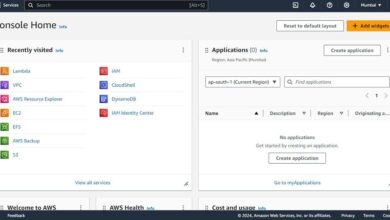
The AWS Management Console is the most user-friendly way to interact with AWS services. It provides a graphical interface where you can manage EC2 instances, S3 buckets, Lambda functions, and more. Logging in through the console is the first experience most users have with AWS.
How to Access the AWS Console Login Page
To begin the AWS login process, navigate to https://aws.amazon.com/console/. From there, click on “Sign In to the Console” and choose whether you’re logging in as a root user or an IAM user.
If you’re using a corporate AWS account, you’ll likely be an IAM user. Root users should only be used for initial setup and extreme emergencies, as they have unrestricted access to all resources and billing information.
- Always bookmark the official AWS login page to avoid phishing sites.
- Use a password manager to store your AWS credentials securely.
- Enable browser notifications for AWS login alerts.
Entering Your Credentials Correctly
When logging in as an IAM user, you’ll need your account ID or alias and your username. The account ID is a 12-digit number, while the alias is a custom name your administrator may have set (e.g., mycompany-aws).
After entering your username, input your password. AWS enforces strong password policies by default, requiring a mix of uppercase, lowercase, numbers, and special characters. If you’ve forgotten your password, use the “Forgot Password?” link—but only if you have the necessary permissions.
After submitting your credentials, if MFA is enabled, you’ll be prompted to enter a code from your authenticator app or hardware token. This adds a critical second layer of security.
Using AWS CLI for Programmatic Login
For developers and DevOps engineers, the AWS Command Line Interface (CLI) is an essential tool. It allows you to manage AWS services directly from your terminal, enabling automation, scripting, and integration into CI/CD pipelines.
Installing and Configuring AWS CLI
Before you can perform an AWS login via CLI, you need to install it. On macOS, use Homebrew: brew install awscli. On Windows, download the installer from the official AWS CLI page. Linux users can use pip: pip install awscli.
Once installed, run aws configure to set up your credentials. You’ll be prompted to enter your AWS Access Key ID, Secret Access Key, default region (e.g., us-east-1), and output format (e.g., json).
- Never hardcode credentials in scripts—use IAM roles or environment variables.
- Rotate access keys regularly to minimize exposure.
- Use named profiles for managing multiple AWS accounts.
Authentication Methods for AWS CLI
The AWS CLI supports several authentication methods beyond static keys. These include IAM roles, temporary security tokens, and SSO (Single Sign-On). For example, when using AWS CLI with an EC2 instance, you can assign an IAM role to the instance, eliminating the need for long-term credentials.
For temporary credentials, use aws sts get-session-token to generate a session token that expires after a set duration. This is ideal for short-lived tasks and reduces the risk of credential theft.
With AWS SSO, you can log in once and access multiple accounts and roles without managing individual access keys. Run aws sso login to initiate the SSO process, which opens a browser window for authentication.
“Using temporary credentials via AWS STS is a best practice for reducing the risk of long-term secret exposure.” — AWS CLI User Guide
AWS Login with IAM Roles and Temporary Credentials
One of the most powerful features of AWS is its support for role-based access. Instead of assigning permanent credentials to users or services, you can grant temporary permissions through IAM roles. This is especially useful in automated environments and cross-account access scenarios.
What Are IAM Roles and How Do They Work?
An IAM role is an identity with specific permissions that can be assumed by users, applications, or AWS services. Unlike users, roles don’t have permanent credentials. Instead, they provide temporary security tokens that expire after a set period (usually 1 hour to 12 hours).
For example, an EC2 instance can assume a role that allows it to read from an S3 bucket. The instance retrieves temporary credentials from the AWS Security Token Service (STS) and uses them to make API calls. This eliminates the need to store access keys on the instance, reducing the attack surface.
- Roles are ideal for cross-account access.
- They support multi-factor authentication for sensitive actions.
- Roles can be assumed via CLI, SDKs, or the console.
Assuming Roles via AWS CLI and SDKs
To assume a role using the AWS CLI, use the aws sts assume-role command. You’ll need the role ARN (Amazon Resource Name) and a session name. The command returns temporary credentials, including an access key, secret key, and session token.
You can then configure these credentials in your CLI profile or export them as environment variables. Here’s an example:
aws sts assume-role --role-arn arn:aws:iam::123456789012:role/MyRole --role-session-name MySessionIn SDKs like Python’s boto3, you can use the assume_role() method to achieve the same result. This is commonly used in Lambda functions, automation scripts, and serverless applications.
Enhancing Security with Multi-Factor Authentication (MFA)
While passwords and access keys are essential, they’re not enough on their own. Multi-Factor Authentication (MFA) adds a critical second layer of protection to your AWS login process. Without MFA, your account is significantly more vulnerable to brute-force attacks and credential theft.
How to Enable MFA for Your AWS Account
To enable MFA, go to the IAM console, select your user, and click “Add MFA.” AWS supports virtual MFA devices (like Google Authenticator or Authy), U2F security keys (like YubiKey), and hardware MFA devices.
After selecting your device type, scan the QR code with your authenticator app and enter two consecutive codes to verify. Once enabled, MFA will be required for every login, including CLI and SDK access when configured.
- Always use a dedicated device for MFA—never your primary phone if possible.
- Register a backup MFA device in case the primary is lost.
- Enable MFA for the root account immediately after account creation.
MFA for Programmatic Access and API Calls
MFA isn’t just for console logins. You can enforce MFA for sensitive API calls using IAM policies. For example, you can require MFA to terminate EC2 instances or delete S3 buckets.
To do this, create a policy that includes the "Condition": { "Bool": { "aws:MultiFactorAuthPresent": "true" } } statement. This ensures that even if someone has your access keys, they can’t perform critical actions without the MFA token.
For CLI users, you can generate temporary credentials that require MFA using aws sts get-session-token with the --serial-number and --token-code parameters.
Troubleshooting Common AWS Login Issues
Even with proper setup, you might encounter issues when trying to perform an AWS login. These can range from incorrect credentials to misconfigured permissions. Knowing how to diagnose and fix these problems is crucial for maintaining productivity.
Forgot Password or Locked Out?
If you’re an IAM user and forget your password, contact your AWS account administrator. They can reset your password in the IAM console. Root users can reset their password using the “Forgot Password?” option on the login page, provided they have access to the registered email and phone number.
If your account is locked due to multiple failed attempts, wait 15 minutes or contact AWS Support. Avoid using automated scripts that repeatedly attempt login, as they can trigger account lockouts.
Access Denied Errors and Permission Fixes
“Access Denied” errors are common and usually stem from insufficient IAM permissions. Check the IAM policy attached to your user or role. Ensure it includes the necessary actions (e.g., s3:GetObject) and resource ARNs.
You can use the IAM Policy Simulator to test your policies before applying them. Also, verify that MFA is not required for the action you’re attempting—if it is, include the session token in your request.
For CLI users, ensure your credentials are correctly configured and not expired. Run aws sts get-caller-identity to verify which identity you’re using and its associated permissions.
Best Practices for Secure and Efficient AWS Login
Securing your AWS login isn’t a one-time task—it’s an ongoing process. As your infrastructure grows, so should your security practices. Following industry best practices ensures that your AWS environment remains both accessible and protected.
Use IAM Roles Over Long-Term Credentials
Whenever possible, use IAM roles instead of storing long-term access keys. Roles provide temporary credentials that reduce the risk of credential leakage. This is especially important for applications running on EC2, ECS, or Lambda.
For example, instead of embedding access keys in a Lambda function, assign an execution role with the minimum required permissions. AWS automatically manages the temporary credentials, and you don’t have to worry about rotation or exposure.
Implement Single Sign-On (SSO) for Enterprise Teams
For organizations with multiple AWS accounts and users, AWS SSO is a game-changer. It allows users to log in once using their corporate identity (via SAML 2.0 or Microsoft Active Directory) and access all their assigned AWS accounts and roles.
With AWS SSO, you can centralize user management, enforce MFA, and audit access across your organization. It integrates seamlessly with Azure AD, Okta, and other identity providers, making it ideal for large enterprises.
- Enable SSO to reduce password fatigue and improve security.
- Use permission sets to standardize role assignments across accounts.
- Monitor SSO login activity in AWS CloudTrail for anomaly detection.
Advanced AWS Login Scenarios and Automation
As your AWS usage becomes more complex, so do your login requirements. From cross-account access to automated deployments, understanding advanced login scenarios is key to scaling securely.
Cross-Account Access Using IAM Roles
Cross-account access allows users from one AWS account to access resources in another. This is commonly used in multi-account architectures, where you have separate accounts for development, staging, and production.
To set this up, create a role in the target account that trusts the source account. The user in the source account can then assume the role using the AWS CLI or console. This avoids the need to create duplicate users and simplifies permission management.
For example, a developer in the dev account can assume a read-only role in the production account to troubleshoot issues without having direct access.
Automating AWS Login with Scripts and CI/CD
In CI/CD pipelines, you often need to authenticate with AWS to deploy applications. Instead of using long-term credentials, use temporary tokens or IAM roles assigned to the build environment.
In GitHub Actions, you can use the aws-actions/configure-aws-credentials action to securely inject temporary credentials. Similarly, in Jenkins, use the AWS Credentials Plugin with role-based authentication.
Always follow the principle of least privilege—grant only the permissions needed for the task at hand. Avoid using root or admin credentials in automation scripts.
“Automation should never come at the cost of security. Always use temporary, scoped credentials in CI/CD workflows.” — AWS DevOps Best Practices
What is the safest way to perform AWS login?
The safest way to perform AWS login is by using IAM roles with multi-factor authentication (MFA). Avoid using long-term access keys, especially in scripts or public repositories. For console access, always enable MFA on your IAM user and root account. For programmatic access, use temporary credentials via AWS STS or AWS SSO.
Can I use social media accounts to log in to AWS?
No, AWS does not support social media logins like Google or Facebook. Authentication is handled through AWS credentials, IAM users, or integration with corporate identity providers via AWS Single Sign-On (SSO) and SAML 2.0.
How do I recover my AWS account if I’m locked out?
If you’re locked out of your AWS account, root users can recover access via the “Forgot Password?” option using the registered email and phone number. IAM users must contact their account administrator for password reset. For persistent issues, contact AWS Support with account verification details.
Is AWS login the same as AWS SSO login?
No, AWS login typically refers to authenticating with IAM users or roles, while AWS SSO is a centralized service that allows users to log in once and access multiple AWS accounts and applications using corporate credentials. AWS SSO enhances security and simplifies user management in multi-account environments.
How often should I rotate my AWS access keys?
AWS recommends rotating access keys every 90 days. However, the best practice is to avoid using long-term keys altogether. Use IAM roles and temporary credentials for most use cases. If you must use access keys, automate rotation using AWS Lambda or IAM policies that enforce expiration.
Mastering AWS login is essential for anyone working with Amazon Web Services. From the basic console login to advanced role assumption and SSO integration, each method plays a crucial role in securing and streamlining access. By following best practices—like enabling MFA, using temporary credentials, and implementing SSO—you can ensure your AWS environment remains both secure and efficient. Whether you’re a solo developer or part of a large enterprise, a solid understanding of AWS login mechanisms is the foundation of effective cloud management.
Recommended for you 👇
Further Reading: