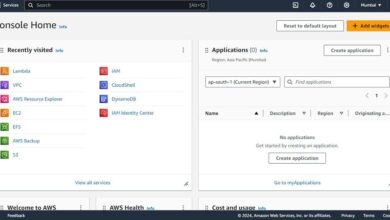
Looking to supercharge your machine learning projects? AWS SageMaker is the game-changer you need. This fully managed service simplifies the entire ML lifecycle—from data prep to deployment—so you can build, train, and deploy models faster and smarter than ever before.



What Is AWS SageMaker and Why It Matters

AWS SageMaker is Amazon Web Services’ flagship machine learning platform designed to help developers, data scientists, and ML engineers build, train, and deploy models at scale. Unlike traditional ML workflows that require stitching together multiple tools and managing complex infrastructure, SageMaker provides an integrated environment that streamlines every step of the process.
Core Definition and Purpose
At its heart, AWS SageMaker is a cloud-based service that removes the heavy lifting from machine learning. It enables users to create ML models without needing deep expertise in infrastructure management or distributed computing. By offering pre-built algorithms, automatic model tuning, and one-click deployment, SageMaker makes ML accessible to both beginners and experts.
- Designed for end-to-end ML workflows
- Reduces dependency on DevOps for model deployment
- Supports custom models and frameworks like TensorFlow, PyTorch, and MXNet
Evolution of SageMaker Since Launch
Launched in 2017, AWS SageMaker was a response to the growing complexity of deploying ML in production. Before SageMaker, teams often spent more time on data engineering and infrastructure than on actual model development. Since its debut, SageMaker has evolved with over 50 new features, including SageMaker Studio, Autopilot, and Debugger.
“SageMaker has transformed how enterprises approach machine learning—making it faster, more reliable, and scalable.” — AWS Executive, re:Invent 2022
Its continuous innovation has positioned it as a leader in the Gartner Magic Quadrant for Cloud AI Developer Services.
Key Features That Make AWS SageMaker Stand Out
One of the biggest reasons AWS SageMaker dominates the ML platform space is its rich feature set. Each component is designed to solve a specific pain point in the ML lifecycle, from experimentation to monitoring.
SageMaker Studio: The Unified Development Environment
SageMaker Studio is often described as an “IDE for machine learning.” It’s a web-based interface where you can write code, track experiments, debug models, and collaborate—all in one place. Think of it as JupyterLab on steroids, fully integrated with AWS services.
- Real-time collaboration with team members
- Visual debugging and model lineage tracking
- Integrated terminal and file browser for seamless workflows
With SageMaker Studio, you can launch a notebook, start training a model, and monitor its performance without switching tabs or tools. This level of integration is unmatched in the industry. Learn more at the official AWS SageMaker Studio page.
SageMaker Autopilot: Automated Machine Learning Made Simple
For teams without dedicated data scientists, SageMaker Autopilot is a game-changer. It automatically explores different ML algorithms and preprocessing techniques to find the best model for your dataset. You simply upload your data, and Autopilot handles feature engineering, model selection, and hyperparameter tuning.
- Fully transparent process—users can inspect every step
- Generates Python notebooks for reproducibility
- Supports both classification and regression tasks
This feature is especially powerful for business analysts or developers who want to leverage ML without deep statistical knowledge.
SageMaker Debugger and Experiments
Debugging ML models has traditionally been a black box. SageMaker Debugger changes that by allowing you to monitor tensors, gradients, and system resources in real time during training. You can set up rules to detect issues like vanishing gradients or overfitting automatically.
SageMaker Experiments, on the other hand, helps you organize and compare thousands of training runs. Each experiment tracks parameters, metrics, and input data, making it easy to reproduce results and optimize performance.
- Visualize training metrics across runs
- Compare model versions side-by-side
- Integrate with CI/CD pipelines for MLOps
How AWS SageMaker Simplifies the ML Lifecycle
The machine learning lifecycle is complex, involving data collection, preprocessing, model training, evaluation, deployment, and monitoring. AWS SageMaker provides tools for each stage, ensuring a smooth and efficient workflow.
Data Preparation with SageMaker Data Wrangler
Data Wrangler is a visual tool that simplifies data preprocessing. Instead of writing dozens of lines of Pandas code, you can use a drag-and-drop interface to clean, transform, and visualize your data. It supports over 30 built-in transformations, including normalization, encoding, and imputation.
- Connects directly to S3, Redshift, and databases
- Exports transformation pipelines as Python code
- Integrates with SageMaker Pipelines for automation
According to AWS, Data Wrangler can reduce data preparation time by up to 90% compared to manual coding.
Model Training and Hyperparameter Optimization
SageMaker makes model training scalable and efficient. You can train models on single instances or distribute training across hundreds of GPUs using SageMaker Distributed. The service supports both built-in algorithms (like XGBoost and Linear Learner) and custom containers.
One of the standout features is Hyperparameter Tuning (also known as Automatic Model Tuning). SageMaker uses Bayesian optimization to explore the best combination of hyperparameters, significantly improving model accuracy without manual trial and error.
- Supports both random and Bayesian search strategies
- Can run hundreds of training jobs in parallel
- Integrates with SageMaker Experiments for tracking
For example, a retail company used SageMaker’s hyperparameter tuning to improve their demand forecasting model by 22% in just two weeks.
Model Deployment and Real-Time Inference
Deploying ML models in production is often the hardest part. SageMaker simplifies this with one-click deployment to scalable endpoints. Once deployed, your model can serve real-time predictions with low latency.
- Auto-scaling based on traffic
- Support for A/B testing between model versions
- Integration with AWS Lambda and API Gateway
You can also deploy models for batch transformations, ideal for processing large datasets overnight. SageMaker handles load balancing, health checks, and failover automatically.
Advanced Capabilities: SageMaker Pipelines and MLOps
As organizations scale their ML operations, they need reproducible, auditable, and automated workflows. This is where SageMaker Pipelines and MLOps come in.
SageMaker Pipelines: CI/CD for Machine Learning
SageMaker Pipelines is the first native CI/CD service for ML in the cloud. It allows you to define, automate, and monitor ML workflows using a directed acyclic graph (DAG). Each pipeline consists of steps like data ingestion, training, evaluation, and approval gates.
- Version control for datasets and models
- Automated testing and validation
- Integration with AWS CodePipeline and CodeBuild
For instance, a financial services firm uses SageMaker Pipelines to retrain fraud detection models daily, ensuring they adapt to new patterns quickly.
Model Monitoring and SageMaker Model Monitor
Models can degrade over time due to data drift or concept drift. SageMaker Model Monitor automatically detects these issues by comparing live traffic against baseline statistics.
- Generates alerts when data distribution shifts
- Visualizes drift metrics in Amazon CloudWatch
- Triggers retraining workflows automatically
This proactive monitoring ensures models remain accurate and trustworthy in production.
Security and Compliance in SageMaker
Enterprise customers demand strong security. SageMaker integrates with AWS Identity and Access Management (IAM), Virtual Private Cloud (VPC), and AWS Key Management Service (KMS) to ensure data protection.
- Encrypt data at rest and in transit
- Isolate training jobs within private subnets
- Audit all actions via AWS CloudTrail
It also supports compliance standards like HIPAA, GDPR, and SOC 2, making it suitable for healthcare, finance, and government applications.
Use Cases: Real-World Applications of AWS SageMaker
AWS SageMaker isn’t just a theoretical platform—it’s being used by companies across industries to solve real problems.
Healthcare: Predicting Patient Outcomes
Hospitals use SageMaker to predict patient readmission risks, optimize staffing, and detect anomalies in medical imaging. For example, a major U.S. hospital system built a model that reduced ICU readmissions by 18% using SageMaker’s built-in XGBoost algorithm.
- Processes electronic health records (EHR) securely
- Enables real-time predictions at point of care
- Complies with HIPAA regulations
Retail: Personalized Recommendations
Retailers leverage SageMaker to power recommendation engines. By analyzing customer behavior, purchase history, and browsing patterns, they can deliver hyper-personalized product suggestions.
- Uses SageMaker built-in Factorization Machines
- Scales to millions of users during peak seasons
- Integrates with mobile apps and websites via APIs
A global e-commerce brand reported a 35% increase in conversion rates after deploying a SageMaker-powered recommendation system.
Manufacturing: Predictive Maintenance
In manufacturing, unplanned downtime costs billions. Companies use SageMaker to analyze sensor data from machinery and predict failures before they happen.
- Processes time-series data from IoT devices
- Uses LSTM networks for anomaly detection
- Deploys models directly to edge devices via SageMaker Edge Manager
One automotive manufacturer reduced maintenance costs by 27% using this approach.
Cost Management and Pricing Model of AWS SageMaker
Understanding SageMaker’s pricing is crucial for budgeting and optimization. The service uses a pay-as-you-go model, so you only pay for what you use.
Breakdown of SageMaker Pricing Components
SageMaker pricing is divided into several categories:
- Notebook Instances: Hourly rate based on instance type (e.g., ml.t3.medium)
- Training Jobs: Based on instance type and duration
- Hosting/Inference: Per hour for endpoint instances and per request for serverless inference
- Storage: For model artifacts and data in S3
For example, a small team using a ml.m5.large notebook instance for 100 hours/month pays around $18. Additional costs apply for training and deployment.
Cost Optimization Strategies
To avoid overspending, follow these best practices:
- Stop notebook instances when not in use
- Use spot instances for training jobs (up to 70% discount)
- Leverage SageMaker Serverless Inference for unpredictable traffic
- Monitor usage with AWS Cost Explorer
One startup saved over $12,000 annually by switching to spot training and auto-shutdown notebooks.
Free Tier and Trial Options
AWS offers a generous free tier for SageMaker, including:
- 250 hours of t2.medium or t3.medium notebook instances per month for 2 months
- 60 hours of ml.t3.medium for SageMaker Studio
- 125 hours of training time on ml.m4.xlarge instances
- 125 hours of hosting on ml.t2.medium instances
This allows developers to experiment risk-free. Learn more at AWS SageMaker Pricing.
Getting Started with AWS SageMaker: A Step-by-Step Guide
Ready to dive in? Here’s how to get started with AWS SageMaker in under 30 minutes.
Setting Up Your AWS Account and IAM Roles
First, create an AWS account if you don’t have one. Then, set up an IAM role with the AmazonSageMakerFullAccess policy. This grants SageMaker the permissions it needs to access S3, ECR, and other services.
- Go to IAM Console → Roles → Create Role
- Select “SageMaker” as the service
- Attach required policies and create the role
Launching Your First Notebook Instance
From the SageMaker console, choose “Notebook Instances” and click “Create notebook instance.”
- Name your instance (e.g.,
my-first-sagemaker-notebook) - Select an instance type (start with
ml.t3.medium) - Attach the IAM role you created
- Click “Create”
Once ready, open Jupyter and start coding.
Running a Sample Machine Learning Project
Try the built-in XGBoost example:
- Download the
abalonedataset from S3 - Use a SageMaker notebook to preprocess and train a regression model
- Deploy the model to an endpoint
- Test predictions using the SDK
This hands-on experience builds confidence and familiarity with the platform.
Comparison: AWS SageMaker vs. Competitors
While SageMaker is powerful, it’s not the only player. Let’s compare it to Google Cloud AI Platform and Microsoft Azure Machine Learning.
SageMaker vs. Google Cloud Vertex AI
Google’s Vertex AI offers a unified ML platform similar to SageMaker. However, SageMaker has broader framework support and deeper integration with its cloud ecosystem. Vertex AI excels in AutoML but lacks SageMaker’s granular control over training infrastructure.
- SageMaker offers more instance types for training
- Vertex AI has better built-in NLP tools
- SageMaker has stronger MLOps capabilities
SageMaker vs. Azure Machine Learning
Azure ML is strong in enterprise integration, especially for .NET and Windows environments. However, SageMaker leads in scalability, speed, and advanced features like Debugger and Pipelines.
- Azure ML has better UI for beginners
- SageMaker supports more deep learning frameworks natively
- Azure integrates better with Microsoft Power BI and Office 365
When to Choose SageMaker Over Others
Choose AWS SageMaker if:
- You’re already using AWS services
- You need full control over ML infrastructure
- You’re building complex, large-scale ML systems
- You value automation and MLOps maturity
It’s the best choice for teams serious about scaling ML in production.
Future of AWS SageMaker and Emerging Trends
The ML landscape is evolving fast, and SageMaker is at the forefront of innovation.
Integration with Generative AI and SageMaker JumpStart
SageMaker JumpStart provides pre-trained models for generative AI, including text generation, image synthesis, and domain-specific LLMs. You can deploy models like Hugging Face Transformers with a single click.
- Access to foundation models like GPT-2, BERT, and Stable Diffusion
- Fine-tuning tools for custom datasets
- Security-hardened models for enterprise use
This positions SageMaker as a key player in the generative AI revolution.
Edge Machine Learning with SageMaker Edge Manager
For IoT and mobile applications, running models on devices is critical. SageMaker Edge Manager optimizes models for edge deployment, monitors performance, and updates them remotely.
- Reduces latency and bandwidth usage
- Supports devices like AWS Panorama and Greengrass
- Enables offline inference
AI Ethics and Responsible ML Tools
AWS is investing in tools to ensure fair and transparent AI. SageMaker Clarify detects bias in datasets and models, while Model Cards provide documentation for model behavior.
- Generates bias reports across sensitive attributes
- Tracks model performance over time
- Supports regulatory compliance
These features help organizations build trustworthy AI systems.
What is AWS SageMaker used for?
AWS SageMaker is used to build, train, and deploy machine learning models at scale. It supports the entire ML lifecycle, from data preparation to model monitoring, and is widely used in industries like healthcare, retail, and manufacturing for tasks such as predictive analytics, recommendation engines, and anomaly detection.
Is AWS SageMaker free to use?
SageMaker offers a free tier with limited usage, including 250 hours of notebook instances and 125 hours of training time. However, most production workloads incur costs based on compute, storage, and inference usage. You only pay for what you use, with no upfront fees.
How does SageMaker compare to other ML platforms?
SageMaker stands out for its deep AWS integration, advanced MLOps tools, and scalability. Compared to Google Vertex AI and Azure ML, it offers more control over infrastructure and stronger automation capabilities, making it ideal for enterprise-grade ML systems.
Can beginners use AWS SageMaker?
Yes, beginners can use SageMaker thanks to tools like Autopilot and Studio’s visual interface. While there’s a learning curve, AWS provides extensive documentation, tutorials, and sample notebooks to help new users get started quickly.
Does SageMaker support deep learning?
Absolutely. SageMaker supports popular deep learning frameworks like TensorFlow, PyTorch, and MXNet. It also offers optimized containers, distributed training, and GPU acceleration to handle complex neural networks efficiently.
In conclusion, AWS SageMaker is more than just a machine learning service—it’s a comprehensive platform that empowers teams to innovate faster and deploy models with confidence. From its intuitive Studio interface to advanced MLOps pipelines, SageMaker removes the friction from ML development. Whether you’re a startup experimenting with AI or an enterprise scaling hundreds of models, SageMaker provides the tools, scalability, and security needed to succeed. As machine learning becomes central to digital transformation, AWS SageMaker stands as a powerful ally in turning data into intelligence.
Recommended for you 👇
Further Reading: