Welcome to the ultimate guide on AWS — where cloud power meets innovation. Whether you’re a beginner or a seasoned pro, this deep dive reveals everything you need to know about Amazon Web Services and how it’s reshaping the digital world.
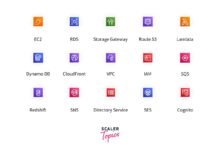
What Is AWS and Why It Dominates the Cloud

Amazon Web Services, commonly known as AWS, is the world’s most comprehensive and widely adopted cloud platform. Launched in 2006, AWS offers over 200 fully featured services from data centers globally, serving millions of customers — including startups, enterprises, and government agencies.
The Birth of AWS: A Game-Changing Innovation
AWS wasn’t initially planned as a standalone business. It emerged from Amazon’s internal need to scale its e-commerce infrastructure. Engineers realized that the scalable, modular systems they built could be offered as external services.
- In 2002, Amazon began exposing its internal systems via APIs.
- By 2004, the first AWS service, Simple Queue Service (SQS), was in development.
- In 2006, AWS officially launched with three core services: S3, EC2, and SQS.
This marked the beginning of the modern cloud era. According to AWS’s official history, the vision was to democratize access to computing power, just like electricity.
How AWS Compares to Competitors
While Microsoft Azure and Google Cloud Platform (GCP) are strong contenders, AWS maintains a dominant market share. As of 2024, AWS holds approximately 32% of the global cloud infrastructure market, ahead of Azure (23%) and GCP (11%) — according to Canalys research.
- Service Breadth: AWS offers more services than any other provider.
- Global Reach: AWS operates in 33 geographic regions with 102 Availability Zones.
- Enterprise Adoption: Fortune 500 companies heavily rely on AWS for scalability and security.
“AWS didn’t just enter the cloud market — it created it.” — TechCrunch, 2023
Core AWS Services Every Developer Should Know
Understanding the foundational services of AWS is crucial for anyone working in cloud computing. These services form the backbone of nearly every application built on AWS.
Amazon EC2: The Heart of AWS Compute
Amazon Elastic Compute Cloud (EC2) provides scalable virtual servers in the cloud. It allows users to launch instances with various configurations — from small, cost-effective machines to high-performance computing instances.
- Supports multiple operating systems, including Linux, Windows, and macOS.
- Offers on-demand, reserved, and spot instances for cost optimization.
- Integrates with Auto Scaling and Elastic Load Balancing for high availability.
EC2 is ideal for web servers, application backends, and batch processing. For more details, visit the official EC2 page.
Amazon S3: Scalable Object Storage
Simple Storage Service (S3) is one of the most popular AWS services. It provides secure, durable, and highly scalable object storage for data backup, analytics, and content delivery.
- Stores data in buckets with versioning and lifecycle policies.
- Supports encryption, access control, and cross-region replication.
- Used by Netflix, Airbnb, and Dropbox for storing petabytes of data.
S3 is designed for 99.999999999% (11 nines) durability, making it one of the most reliable storage solutions on the planet.
AWS Lambda: Serverless Computing Power
Lambda lets you run code without provisioning or managing servers. You pay only for the compute time you consume — there’s no charge when your code isn’t running.
- Supports Python, Node.js, Java, Go, and .NET.
- Triggers can come from S3, DynamoDB, API Gateway, and more.
- Ideal for event-driven architectures and microservices.
Lambda has revolutionized how developers think about scalability. Instead of managing infrastructure, they focus purely on code logic.
How AWS Powers Global Businesses
From startups to Fortune 500 companies, AWS is the engine behind countless digital transformations. Its flexibility and reliability make it the go-to choice for businesses aiming to scale rapidly.
Netflix: Streaming on AWS at Massive Scale
Netflix, one of the largest streaming platforms, runs almost entirely on AWS. It uses EC2 for video encoding, S3 for storing media files, and CloudFront for content delivery.
- Handles over 1 billion hours of video streamed weekly.
- Leverages AWS’s global edge locations for low-latency delivery.
- Uses AWS AI/ML services for personalized recommendations.
According to Netflix’s engineering blog, migrating to AWS allowed them to scale globally without building physical data centers.
Adobe: Creative Cloud on AWS
Adobe transitioned its Creative Cloud suite to AWS to improve performance and reduce latency for users worldwide.
- Uses AWS for real-time collaboration in tools like Photoshop and Illustrator.
- Leverages Amazon RDS and DynamoDB for user data management.
- Employs AWS security services to protect sensitive customer data.
This shift enabled Adobe to deliver seamless updates and new features faster than ever before.
Unilever: Digital Transformation with AWS
Unilever, the global consumer goods giant, uses AWS to modernize its supply chain and customer engagement platforms.
- Implements AI-driven demand forecasting using Amazon SageMaker.
- Uses AWS IoT services to monitor manufacturing equipment in real time.
- Deploys chatbots powered by Amazon Lex for customer service.
By leveraging AWS, Unilever reduced time-to-market for new products and improved operational efficiency.
Security and Compliance in AWS
Security is a top priority for AWS. The platform is designed with a shared responsibility model: AWS secures the infrastructure, while customers secure their data and applications.
AWS Shared Responsibility Model Explained
This model defines who is responsible for what in the cloud environment.
- AWS Responsibilities: Physical security of data centers, hardware, software, networking, and virtualization.
- Customer Responsibilities: Identity and access management, firewall configuration, data encryption, and OS patching.
- Shared: Compliance, vulnerability scanning, and threat detection.
Understanding this model is critical to maintaining a secure AWS environment. Learn more at AWS Compliance.
Key Security Services in AWS
AWS offers a robust suite of security tools to protect your cloud environment.
- AWS Identity and Access Management (IAM): Controls user access and permissions.
- AWS Shield: Protects against DDoS attacks.
- AWS WAF: Filters malicious web traffic.
- AWS Key Management Service (KMS): Manages encryption keys.
- Amazon GuardDuty: Detects unauthorized behavior and threats.
These services work together to create a defense-in-depth strategy, ensuring your data stays safe.
Compliance and Certifications
AWS complies with numerous global standards, making it suitable for regulated industries.
- GDPR, HIPAA, SOC 1/2/3, PCI-DSS, ISO 27001, and more.
- Available in AWS Artifact, a self-service portal for compliance reports.
- Supports audit logging via AWS CloudTrail.
Organizations in healthcare, finance, and government trust AWS because of its rigorous compliance framework.
Cost Management and Optimization in AWS
While AWS offers immense value, costs can spiral without proper management. Understanding pricing models and optimization strategies is essential.
Understanding AWS Pricing Models
AWS uses a pay-as-you-go model, but there are several pricing options to choose from.
- On-Demand: Pay for compute by the second with no long-term commitment.
- Reserved Instances: Save up to 75% by committing to 1- or 3-year terms.
- Spot Instances: Bid on unused EC2 capacity for up to 90% off.
- Savings Plans: Flexible pricing for consistent usage across services.
Choosing the right model depends on your workload’s predictability and budget.
Tools for Monitoring and Reducing AWS Costs
AWS provides several tools to help you track and optimize spending.
- AWS Cost Explorer: Visualize and analyze your spending trends.
- AWS Budgets: Set custom cost and usage alerts.
- AWS Trusted Advisor: Offers recommendations for cost optimization, security, and performance.
- AWS Compute Optimizer: Analyzes resource usage and suggests right-sizing.
Regular audits using these tools can prevent budget overruns and improve efficiency.
Best Practices for Cost Optimization
Here are proven strategies to keep your AWS bills under control:
- Right-size your EC2 instances based on actual CPU and memory usage.
- Delete unused EBS volumes and snapshots to avoid storage charges.
- Use S3 Intelligent-Tiering for automatic cost-effective storage class switching.
- Enable auto-scaling to match demand and avoid over-provisioning.
- Consolidate billing across multiple accounts using AWS Organizations.
Many companies save millions annually by implementing these practices.
Machine Learning and AI Services on AWS
AWS is a leader in democratizing artificial intelligence and machine learning. Its suite of AI services enables developers to build intelligent applications without deep expertise in data science.
Amazon SageMaker: Build, Train, and Deploy ML Models
SageMaker is a fully managed service that covers the entire machine learning workflow.
- Provides Jupyter notebooks for data exploration.
- Includes built-in algorithms and support for custom models.
- Automates model training and hyperparameter tuning.
- Enables one-click deployment to production.
Companies like Intuit and BMW use SageMaker to power fraud detection, customer insights, and autonomous driving research.
AI-Powered Services for Developers
AWS offers pre-built AI services that can be integrated via APIs.
- Amazon Rekognition: Image and video analysis for facial recognition, object detection, and moderation.
- Amazon Polly: Text-to-speech service with lifelike voices.
- Amazon Transcribe: Automatic speech recognition for call centers and media.
- Amazon Lex: Powers conversational chatbots (used in Alexa).
- Amazon Comprehend: Natural language processing for sentiment analysis and topic modeling.
These services allow even small teams to add advanced AI capabilities to their applications.
Real-World AI Use Cases on AWS
Organizations are leveraging AWS AI to solve real problems.
- Healthcare: AWS helps detect diseases from medical images using Rekognition and SageMaker.
- Retail: Personalized recommendations powered by Comprehend and SageMaker.
- Finance: Fraud detection systems using anomaly detection models.
- Media: Automated content tagging and transcription for video archives.
The accessibility of these tools is accelerating innovation across industries.
Getting Started with AWS: A Step-by-Step Guide
Starting with AWS can seem overwhelming, but with the right approach, you can quickly get up and running.
Creating Your AWS Account
The first step is signing up for an AWS account at aws.amazon.com.
- Provide your email, password, and payment method.
- Choose the free tier option to access 100+ services for 12 months.
- Verify your identity via phone call or text.
The AWS Free Tier is perfect for learning and small projects.
Navigating the AWS Management Console
The AWS Management Console is your central hub for managing services.
- Use the search bar to find services quickly.
- Switch between regions using the dropdown in the top-right corner.
- Use the navigation pane to access services like EC2, S3, and IAM.
- Customize your dashboard with frequently used services.
Familiarizing yourself with the console layout saves time and reduces errors.
Launching Your First EC2 Instance
Here’s how to launch a basic web server:
- Go to EC2 Dashboard and click “Launch Instance”.
- Choose an Amazon Machine Image (AMI), like Amazon Linux 2.
- Select an instance type (e.g., t2.micro for free tier).
- Configure security groups to allow HTTP/HTTPS traffic.
- Review and launch, then download your key pair (.pem file).
Once launched, you can SSH into your instance and start hosting a website.
Future Trends in AWS and Cloud Computing
AWS continues to innovate at a rapid pace. Understanding upcoming trends helps businesses stay ahead of the curve.
Edge Computing with AWS Wavelength and Outposts
AWS is bringing cloud computing closer to users and devices.
- AWS Wavelength: Embeds AWS services within 5G networks for ultra-low latency.
- AWS Outposts: Runs AWS infrastructure on-premises for hybrid environments.
- Enables real-time applications like AR/VR, autonomous vehicles, and industrial automation.
This shift reduces latency and improves performance for time-sensitive applications.
Quantum Computing with Amazon Braket
Amazon Braket provides access to quantum computers from different hardware providers.
- Allows researchers and developers to experiment with quantum algorithms.
- Integrates with SageMaker for hybrid classical-quantum workflows.
- Still in early stages but holds promise for cryptography, drug discovery, and optimization.
While not mainstream yet, Braket positions AWS as a pioneer in next-gen computing.
Sustainability and Green Cloud Initiatives
AWS is committed to sustainability, aiming to power its operations with 100% renewable energy by 2025.
- Operates some of the most energy-efficient data centers in the world.
- Invests in wind and solar farms globally.
- Offers tools like the AWS Customer Carbon Footprint Tool to track emissions.
As environmental concerns grow, AWS’s green initiatives enhance its appeal to eco-conscious organizations.
What is AWS and why is it important?
AWS (Amazon Web Services) is the world’s leading cloud platform, offering scalable, reliable, and secure infrastructure and services. It’s important because it enables businesses to innovate faster, reduce costs, and scale globally without investing in physical hardware.
Is AWS free to use?
AWS offers a Free Tier that includes 100+ services for 12 months, along with always-free options like 5GB of S3 storage and 1 million Lambda requests per month. However, most services incur costs after free limits are exceeded.
How do I learn AWS?
You can learn AWS through free resources like AWS Training and Certification, hands-on labs, YouTube tutorials, and platforms like Coursera and Udemy. Start with the AWS Cloud Practitioner certification to build foundational knowledge.
What are the most popular AWS services?
The most popular AWS services include Amazon EC2 (compute), S3 (storage), Lambda (serverless), RDS (databases), IAM (security), and CloudFront (content delivery). These form the core of most cloud architectures.
Can AWS be used for machine learning?
Yes, AWS provides powerful machine learning services like Amazon SageMaker, Rekognition, Polly, and Comprehend. These tools enable developers to build, train, and deploy AI models without deep expertise in data science.
AWS has revolutionized the way businesses operate in the digital age. From its humble beginnings as an internal project at Amazon to becoming the backbone of global tech giants, AWS continues to lead the cloud computing revolution. With its vast array of services, unmatched scalability, and continuous innovation in AI, edge computing, and sustainability, AWS is not just a platform — it’s a catalyst for transformation. Whether you’re launching your first website or building a global AI-powered application, AWS provides the tools and infrastructure to succeed. The future of technology is in the cloud, and AWS is at the forefront.
Further Reading:
