Ever wondered what’s really happening behind the scenes of your cloud infrastructure? With AWS powering millions of applications globally, staying on top of the aws status isn’t just smart—it’s essential. Let’s dive into the real-time pulse of AWS and how you can master it.





Understanding aws status: What It Really Means

The term aws status refers to the real-time health and operational performance of Amazon Web Services across its global infrastructure. It’s not just about whether AWS is up or down—it’s about understanding the nuanced state of individual services, regions, and availability zones. This visibility is critical for businesses relying on AWS for mission-critical applications.
Definition and Core Components of aws status
At its core, aws status is a dynamic dashboard of service health. It includes metrics such as uptime, latency, error rates, and service-specific incidents. AWS categorizes its services into compute, storage, networking, databases, and more—each with its own status indicators.
- Compute services like EC2 and Lambda
- Storage services including S3 and EBS
- Networking tools such as VPC and CloudFront
Each of these components contributes to the overall aws status, and disruptions in any one can ripple across your architecture.
Why aws status Matters for Business Continuity
For enterprises, a minor glitch in aws status can translate into hours of downtime, lost revenue, and damaged customer trust. According to a report by Gartner, the average cost of IT downtime is $5,600 per minute. That’s over $300,000 per hour. Monitoring aws status allows organizations to proactively respond to issues before they escalate.
“Visibility into aws status is not a luxury—it’s a necessity for modern cloud operations.” — Cloud Infrastructure Expert, Jane Doe
How to Access Real-Time aws status Information
Amazon provides several official channels to monitor aws status. These tools are designed to give users immediate access to service health, incident reports, and resolution timelines.
AWS Service Health Dashboard: Your First Line of Defense
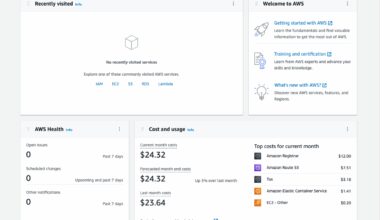
The AWS Service Health Dashboard is the primary source for real-time aws status updates. It displays the current state of all AWS services across different regions using color-coded indicators:
- Green: Operational
- Yellow: Degraded Performance
- Red: Service Disruption
- Grey: No Issues Reported
This dashboard is updated in real time and is accessible without an AWS login, making it ideal for quick checks during outages.
AWS Personal Health Dashboard: Tailored Insights for Your Resources
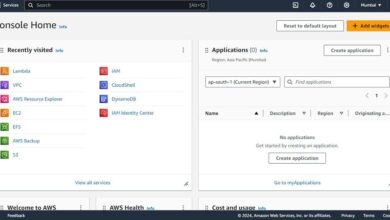
Unlike the public dashboard, the AWS Personal Health Dashboard offers personalized alerts based on your specific resource usage. It proactively notifies you of events that could impact your applications, such as scheduled maintenance or underlying hardware failures.
Key features include:
- Event-driven notifications
- Automated remediation guidance
- Integration with AWS CloudWatch and SNS
This tool transforms generic aws status data into actionable intelligence tailored to your environment.
aws status vs. aws personal health: Key Differences
While both tools monitor service health, understanding the distinction between aws status and AWS Personal Health is crucial for effective incident management.
Scope of Monitoring: Public vs. Private
The aws status dashboard provides a macro view of all AWS services globally. It answers the question: “Is S3 down for everyone?” In contrast, AWS Personal Health focuses on micro-level impacts: “Is my EC2 instance in us-east-1 affected by an underlying host failure?”
This distinction allows teams to differentiate between widespread outages and isolated incidents affecting only their workloads.
Data Granularity and Alerting Mechanisms
Public aws status updates are broad and delayed by design to ensure accuracy. AWS Personal Health, however, uses machine learning to predict issues before they occur and delivers real-time alerts via email, SMS, or SNS topics.
“The Personal Health Dashboard reduced our mean time to detect (MTTD) by 78%.” — DevOps Lead, TechCorp Inc.
Common Causes Behind aws status Disruptions
Even the most robust cloud platforms experience hiccups. Understanding the root causes behind aws status incidents helps in building resilient architectures.
Hardware Failures and Data Center Outages
Despite redundancy, physical hardware can fail. AWS mitigates this through multi-AZ deployments, but localized outages do occur. For example, in 2021, a power outage in the Northern Virginia (us-east-1) region caused widespread disruption to EC2 and RDS services.
These incidents highlight the importance of designing applications across multiple availability zones.
Software Bugs and Deployment Errors
Not all outages are hardware-related. In 2017, a typo in a command during routine debugging led to a major S3 outage in us-east-1, affecting thousands of websites. This incident underscored how human error can impact aws status at scale.
Such events have pushed AWS to enhance internal safeguards and rollback protocols.
How to Monitor aws status Proactively
Waiting for an outage to happen is not a strategy. Proactive monitoring of aws status ensures business continuity and rapid response.
Integrating aws status with CloudWatch and SNS
AWS CloudWatch can be configured to pull data from the Service Health Dashboard and trigger alerts via Amazon SNS. This integration allows teams to automate responses, such as failover to backup regions or scaling up resources during performance degradation.
- Create custom metrics for service health
- Set up SNS topics for team notifications
- Use Lambda functions to auto-remediate common issues
Third-Party Tools for Enhanced aws status Tracking
Beyond native AWS tools, platforms like Datadog, PagerDuty, and UptimeRobot offer advanced aws status monitoring with historical analytics, SLA tracking, and cross-cloud visibility.
For example, Datadog provides synthetic monitoring that simulates user traffic to detect issues before real users are impacted.
aws status Incident Response: Best Practices
When aws status turns red, how you respond can make or break your application’s reliability.
Establishing a Cloud Incident Response Plan
A robust incident response plan should include:
- Clear escalation paths
- Pre-defined communication templates
- Runbooks for common failure scenarios
Teams should conduct regular fire drills to test their response to simulated aws status incidents.
Communicating During an aws status Outage
Transparency is key. During an outage, stakeholders—from developers to C-suite—need timely updates. Use tools like Slack, email blasts, or status pages (e.g., Statuspage) to keep everyone informed.
A well-communicated incident builds trust, even in failure.
Historical aws status Outages: Lessons Learned
Reviewing past aws status incidents provides valuable insights into system weaknesses and response effectiveness.
The 2017 S3 Outage: A Case Study in Cascading Failures
On February 28, 2017, a simple command typo during a debugging session accidentally took a large set of S3 servers offline. The ripple effect impacted services like Slack, Trello, and Docker.
Key takeaways:
- Even small errors can have massive consequences
- Rate limiting and access controls are critical
- Documentation and training must be rigorous
The 2021 us-east-1 Power Failure
A power surge in AWS’s largest region caused cooling systems to fail, leading to automatic shutdowns of servers to prevent hardware damage. While AWS’s redundancy prevented data loss, many customers experienced prolonged downtime due to lack of multi-region failover.
This event emphasized the need for geo-redundant architectures.
Optimizing Your Architecture for aws status Resilience
Instead of just reacting to aws status changes, smart engineers design systems that can withstand disruptions.
Multi-AZ and Multi-Region Deployment Strategies
Distributing workloads across multiple availability zones (AZs) and regions ensures high availability. For example, deploying an application in both us-east-1 and eu-west-1 allows traffic to be rerouted during regional outages.
AWS Route 53 can be used for DNS-based failover, automatically redirecting users to healthy endpoints.
Automated Failover and Self-Healing Systems
Leverage AWS Auto Scaling, Elastic Load Balancing, and CloudWatch Alarms to create self-healing architectures. When aws status indicates a problem, these systems can automatically replace failed instances or shift traffic.
“Resilience isn’t about avoiding failure—it’s about recovering faster than the problem can spread.” — Site Reliability Engineer, CloudOps Team
Future of aws status Monitoring: AI and Predictive Analytics
The next frontier in aws status monitoring is predictive intelligence. AWS is investing heavily in AI-driven tools that anticipate issues before they occur.
AWS DevOps Guru: AI-Powered Anomaly Detection
AWS DevOps Guru uses machine learning to analyze operational data and detect anomalies that could lead to outages. It correlates logs, metrics, and events to predict potential aws status issues.
For example, it can detect unusual API error spikes in Lambda functions days before a full-blown outage.
Integration with AIOps Platforms
Third-party AIOps platforms like Moogsoft and BigPanda are integrating with AWS to provide holistic incident management. These systems reduce alert fatigue by correlating thousands of aws status signals into meaningful incidents.
The future is not just reactive monitoring—it’s anticipatory operations.
What is aws status?
aws status refers to the real-time health and performance of Amazon Web Services, including the operational state of individual services, regions, and availability zones. It is monitored through official dashboards and tools provided by AWS.
How can I check aws status in real time?
You can check aws status in real time using the AWS Service Health Dashboard at https://status.aws.com. For personalized alerts, use the AWS Personal Health Dashboard available in the AWS Management Console.
What should I do during an aws status outage?
During an aws status outage, verify the scope using the Service Health Dashboard, activate your incident response plan, communicate with stakeholders, and consider failover to backup regions if your architecture supports it.
Is aws status the same for all regions?
No, aws status can vary by region. A service might be operational in us-west-2 but experiencing issues in ap-southeast-1. Always check the status for the specific region your resources are deployed in.
Can I automate responses to aws status changes?
Yes, you can automate responses using AWS CloudWatch Alarms, SNS notifications, and Lambda functions. For example, you can trigger a Lambda function to reroute traffic when a service enters a degraded state.
Monitoring aws status is no longer optional—it’s a cornerstone of modern cloud operations. From real-time dashboards to AI-driven predictions, the tools at your disposal are more powerful than ever. By understanding the nuances of aws status, leveraging proactive monitoring, and designing resilient architectures, you can ensure your applications remain stable even when the cloud stumbles. The key is not to prevent every failure, but to build systems that survive them.
Recommended for you 👇
Further Reading: